
Most popular







Subscribe to our blog
Most recent
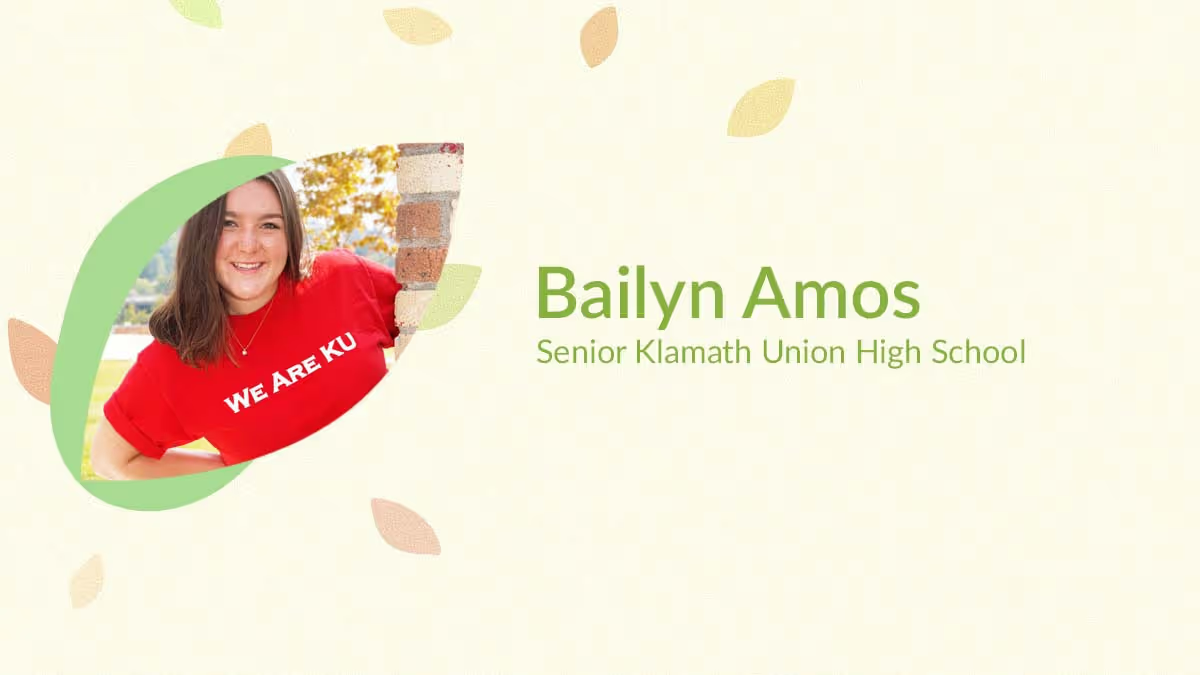
Yearbook hero Bailyn Amos's leadership lessons
Treering Yearbook Heroes is a monthly feature focusing on yearbook adviser (and in this case, student editor) tips and tricks.
This year we at Treering called on all our schools’ parents, teachers, and students to nominate yearbook heroes in a first-ever peoples’ contest: #YearbookHero. The yearbook callout contest was prompted by our empathy and true appreciation for our yearbook editors.
Klamath Union High School senior Bailyn Amos won first place in the high school division; her team nominated her because she led them in problem-solving how to produce a yearbook in the 2020-2021 school year. From collecting photos from students to gaining valuable skills that will stick with her for years to come, Bailyn shares her experience leading her staff in creating a beautiful yearbook Klamath Union High School students will treasure for years to come.
What does it mean to you to be Klamath Union High School’s Yearbook Hero?
Being a Yearbook Hero means that I have the ability to give back to my school and express how the school year was and all the good times we had.
How did you go about getting the photo submission for the yearbook? How did you motivate your peers to get involved, especially those that weren’t involved in the media design class?
I motivated my peers by making every minute spent working a fun experience. We turned work into a mini party and played lots of music and watched lots of movies! With some of my friends who weren't in media design classes, I spent a lot of time on calls with them working at home. Treering made it really easy to work on the yearbook anywhere and at any time.
What advice would you give to students for gathering photos from parents? In your opinion, what are some tips for talking to parents about yearbook needs as it could be viewed as intimidating for some students?
The school sent out a lot of notices and emails to not only students, but the parents as well informing them on deadlines and such. Treering was a great tool to help gather as many quality photos for the yearbook as possible. We also leveraged social media to ensure we had plenty to choose from!
What kind of leadership skills do you feel you implemented during the past year when leading yearbook creation?
Starting off, I felt like I didn't have much leadership skills other than being loud. But by the end, I picked up so many different skills. I learned how to better communicate what needs to be done and how it can be done. I also feel more comfortable being in a leadership position and am so much more confident in my work, which is something I struggled with in the past.
How has being involved with the yearbook inspired your career choices?
Being involved with the yearbook inspired me to pursue a career in teaching because it showed me how much I enjoyed teaching how everything worked and how to build up skills. Overall it was a lot of fun and something I can see myself doing in the future.

Yearbook photography laws: etiquette vs. legal rights
Have you ever wondered about yearbook photography laws and whether you can take pictures somewhere? Fun fact: photographing the Eiffel Tower is legal during the daytime, but things get more complicated at night. Learn what is okay and what's not in our list of photographers' rights.
Everyone has a camera in their pocket these days, don't they? It’s good to know that we can capture the moments that mean the most to us. But few of us think about or even know our rights or limitations in being able to do so.
I didn’t either until a store manager approached me one day. I was attempting to take a picture of my daughter and her friend in front of a display in the middle of the mall. The manager nicely explained that their store carries a stringent "no photography" rule and I would not be allowed to post my photo anywhere online.
I immediately complied with the manager for a few reasons. First, I didn’t consider it to be a big deal. It was just a posed photo - and I had taken a dozen more that day - so there was no importance to that particular shot. Also, I didn’t want to make more of a scene in front of the kids than had already occurred. And lastly, I needed to familiarize myself with yearbook photography laws and my rights as an amateur photographer.
To prevent finding yourself in a similar situation, read up on your rights to take and publish photographs. You can use this information to determine what is acceptable in your school's yearbook.
The laws
Not all "no photography" signs are clear, so always be on the lookout.
The general rule is that if you’re in a public place and can see it, you can shoot it. So, if you’re at the park or beach, whatever you see is open for photographing. Taking pictures on government property is mostly considered okay but prohibited on military bases and inside government buildings. (So, photos at the Washington Monument are fine, but taking pics inside your local courthouse isn’t.)
The line blurs a bit regarding what is called expected privacy. You’re not allowed to take pictures on public property if there is an expectation of privacy. For example, public restrooms are off-limits from photography. Similarly, taking photographs inside someone’s windows while standing on the sidewalk on public property is unacceptable.
When you’re on private property, the rules are more defined. The property owner can dictate what you are and aren’t able to photograph. You can be cited for trespassing if you do not adhere to these rules.
You can take pictures of strangers in public places without their consent. However, you cannot sell them without their knowledge or permission. For example, you can’t snap a picture of a stranger walking past you on the street and then sell it for profit as an advertisement to Coca-Cola. But, when you take a picture of someone at the science fair, publishing it in your yearbook is okay.
Err on the side of etiquette
Many public places like zoos and museums have photography rules posted directly on their website. But if you’re out on a school trip and can't find information about the photography regulations, ask someone who works there. Some locations allow and even encourage photography. Others allow photography as long as you don't use flash. Still others prohibit all photography, whether you intend to publish it or not. In the case of banned photography, management can ask you to leave the premises or, in extreme cases, have the authorities called. Again, save yourself the hassle and ask an employee.
When photographing other people, especially children, even though it’s legal to take their pictures in public, it’s still better –and more polite– to ask first.
At the beginning of the school year, students should receive a photography waiver for their parents to complete and return. This form allows families to decide whether their child’s photo can be taken and placed in school publications such as the yearbook. Make a list and keep it with you to avoid cross-referencing later.
The ACLU also recommends carrying this printable pocket guide of photographer’s rights with you in case someone approaches you despite being within your legal rights. Had I had such a document when that store manager spoke with me, I could have politely explained that malls are open to the public and I was within my rights.
Hassle-free yearbook publishing
Educating yourself on what is and isn’t acceptable in the world of yearbook photography laws can save you a lot of headaches when creating your yearbook. You’re already using Treering to make designing and publishing your yearbook easier, so following these simple rules will ensure you spend time on the fun aspects of yearbook creation rather than time-consuming hassles.
Are you still wondering what's up with the Eiffel Tower? The twinkle lights that come on at night are considered their own art installation and are still under copyright. Want the full coq au vin? Click ici.
Please note: this is not a legally binding guide. Photographers should always check the rules and regulations of all establishments and with parents before taking pictures.

Teaching yearbook: game on
Camaraderie. Team work. Unity. Stress relief. Fun. These are just some benefits of adding games to your yearbook class. Balancing academics, extracurricular activities, and personal commitments can be demanding for students and advisers. Obvious statement: the yearbook production process adds a layer of responsibility. Playing games with your yearbook team early in the school year can be a way to break down walls. At the end of the year, playing games is a way to reconnect, rejuvenate, and review (because, if your district requires it, games can be a summative assessment.) Our curriculum team put together three games.
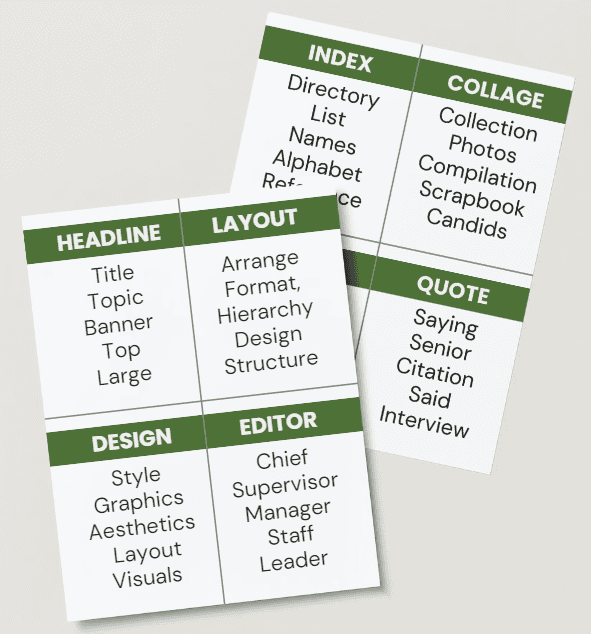
1. Off-limits, yearbook-style
This is the game of forbidden words. In teams, students try to get their teammates to guess the word on the card without saying the word itself or any of the off-limits words listed on the card. We created a mini-deck of 12 cards as a quick (and potentially loud) warm-up.
Rules
- Divide the group into two teams.
- Each team will alternate as the guessing and enforcing teams.
- In each round, one person from the guessing team will serve as the clue-giver. The clue-giver draws a card from the deck and tries to get their teammates to guess the word written on the top of the card. The clue-giver is not allowed to say the word itself or any of the “off-limits” words listed on the card.
- One member of the enforcing team will keep an eye on the “off-limits” words. If the clue-giver accidentally says an off-limits word (this includes variants) or phrase, the word is forfeited with no points awarded.
- Set a timer for each turn, typically 30-60 seconds, depending on age.
- When the guessing team correctly guesses a word, they earn a point.
- The game continues until all cards have been used. The team with the most points at the end wins the game.
Variations for play
- Project a card on the screen, and have the guesser stand in front while classmates deliver clues.
- Send a card via Team, Slack, Band, etc. and have team members comment with clues.
- Share a card on social and see if your followers know yearbook terminology.
2. Sketch charades
Drawing and guessing go hand-in-hand in this guessing game. It challenges players' drawing skills and ability to interpret visual cues.
Rules
- Divide players into two teams. Each team selects a player to be the “artist” for their turn.
- At the start of each round, the artists draw one card.
- Without using any letters, numbers, gestures, or verbal clues, the artists sketch an image representing the word or phrase on the card. Both teams are guessing the same word.
- Set a timer for each round, typically 45-60 seconds, depending on age.
- If a team guesses the word correctly before time runs out, they earn a point.
- Rotate artists each round.
- The game continues until all cards have been used or until a predetermined point goal is reached. The team with the most points at the end wins the game.
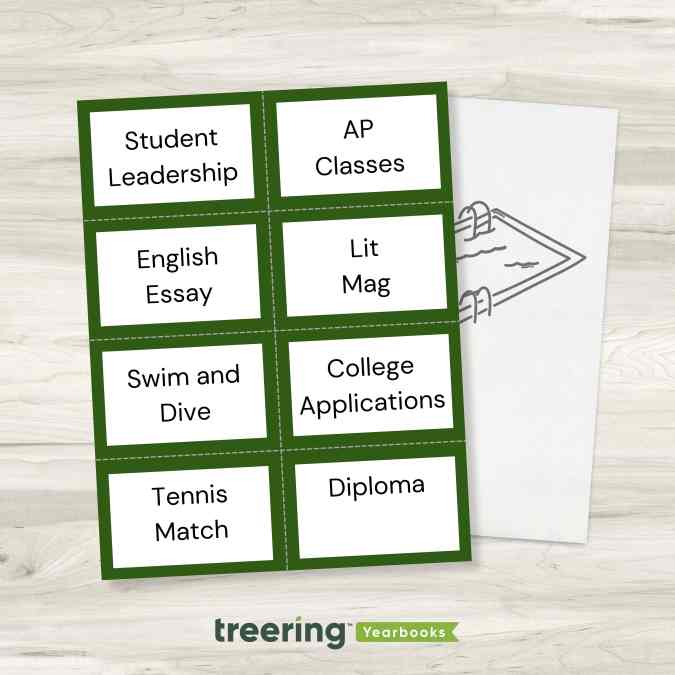
3. Category countdown
Based on a classic party game, Category Countdown facilitates players to try to come up with unique words or phrases that fit specific categories in a hurry. Creative thinkers come up with some answers that push the limits–that’s why this is a crowd favorite.
Rules
- Display a category related to yearbooks.
- Set a timer for one minute, and have students take turns writing down items that fit within the category.
- When time is up, have a student read off their list. If no other student has the word, it’s one point.
- The student with the most unique answers after five rounds wins.

Variations for play
- In larger yearbook classes or clubs, break students into teams. One team can negate the others with duplicate words.
- Have students create a yearbook alphabet by brainstorming one answer per letter, A-Z.
- Use a random letter generator to limit responses to one letter.
Bonus: yearbook escape room
We created this yearbook freebie, which includes four puzzles that “unlock” the final clue. Yearbook advisers, use this print-and-go lesson for vocabulary review.
When you use these games for moments of shared fun, be sure to tag us on Facebook, Instagram, or TikTok when you share the videos.
Yearbook Hero Mike Meloney didn’t have time to do the yearbook
Treering Yearbook Heroes is a monthly feature focusing on yearbook tips and tricks.
When Mike Meloney showed up to enroll his eldest son in kindergarten, the principal gave him a hero’s welcome because he was the school's yearbook coordinator. Except Meloney didn’t know he had the job.
How did you get "voluntold" to be the yearbook chair?
My sister works for Treering, and she was helping schools in San Diego make the switch from other publishers. When she called McKinley, Kristie not only sold them on Treering but also on me. She said it would be a great way to connect with the community and engage.
I told her I didn’t have time.
Four years later, you’re still doing the book. How did you help build a yearbook culture at McKinley?
I learned to get organized early. Even without photos, you can still do a ton of work on day one of school to make the rest of the year easier: label every page on the ladder and then make a shared Google folder for each page. Get those shared folders to every teacher, event coordinator, and committee involved. Send reminders once a month to share pics.
It's really been profound to go and take the photos, lay out the book, and help with the sales. When I show up, students say, "Hey, it's the yearbook guy."
Then, at the end of the year, when you give them out, and everyone's just googly-eyed about the year, they have this warm book in their hands. They sign it. It's just so special. And the memories that we make are—I hope—lifelong.
I have about five books left in me. My youngest is now in kindergarten.
What kinds of things do you do at the signing party?
It's all about reflection. One year, we had ice cream—as long as sugar's involved, kids are more engaged.
It's just a special time to be together, really reflect on the year, laugh, and share stories.
Custom pages are a big deal at our school. One person puts in 100, but many folks just do the two pages for free. The more I share about it, the more people get engaged.
At first, there's always the worry about the pages appearing in everyone's book. I tell them, “No, this is just your book that gets those pages.”
Once folks learn how easy it is to make them, they just go to town.
What do your kids think about being the ”yearbook guy?”
I have a unique connection with them and with the community. My kids are fully supportive. They're very critical at the same time. They'll come over and see the book-in-progress and say things like, “That doesn't go there” or “I don't like it.” And if I ever have a question about something, they just answer it.
So, in some sense, they're part of the committee.
What is something special you’re doing this year?
It’s the centennial year. The school opened in February 1925, and now, 100 years later, we're going from the Cougars to the original mascot, the Magpies. We also have an aerial drone shot of the kids lined up in the number 100.
The kids got together to research and interview some folks who were around in the school 60 years ago. They found these folks still living in the community, found old pictures, and made an exhibit.
Next month, there will be a centennial-themed scavenger hunt and, later, a variety show called “A Hundred Years of Stars.”
It’s a special year.
Any final thoughts?
You don’t need to carve out huge amounts of time to focus on making the yearbook, especially in the spring when there is a lot of content and you just have to layout pages. Do one to five pics while your kids are lackadaisical about getting their shoes on. Every moment in the Treering app is a chance to crop, zoom, and make it nice.

Four yearbook marketing ideas backed by psychology, no degree required
When it comes to marketing your yearbook, it’s probably enough to tell some students and parents in your school that the book’s on sale. For everyone else, though, you need to work a little (and, sometimes, a lot) harder. It’s almost like you need to get in their heads. Luckily for you, we’ve got four yearbook marketing ideas that are backed by proven psychology principles. And you don’t even need a degree in that field to use ‘em. These tactics will make marketing your yearbook twice as easy (and you’ll sound four times more impressive talking about why you used them*).
Yearbook marketing ideas backed by psychology #1: ask for help.
- Psychology Principle At Play: The Ben Franklin Effect
- Fancy Definition: “You grow to like people for whom you do nice things."
Sure, you might be thinking, this principle makes sense. Of course we help people we like. If that's you right now, go back and read that definition again.
The Ben Franklin Effect actually says that you grow to like people because you do them a favor (not the more commonly thought of reverse). Weird, right?
Here’s the thing, though: it’s been proven by psychologists. If you want to put this principle to use in your yearbook marketing, try this idea:
Instead of asking someone to buy the yearbook, ask them to do something that will help you produce it. It doesn’t have to be a lot of help. It could be something small, like contributing a couple of photos from a field trip or asking an event participant for a quote to use in your coverage. Or it could be large, like coordinating an effort to get everyone from a specific grade to fill out a survey.
The point isn’t so much the help you’re getting (though that’s a wonderful benefit) as it is the relationship you’re building. Do it enough times with enough people and you’ll be creating connections with a growing list of people who like you, your team, and the yearbook more than they did before (hard to believe that’s possible, we know). And that connection is the key. It’ll make your helpers more likely to buy a book.
Yearbook marketing ideas backed by psychology #2: advertise how many students have bought the yearbook.
- Psychology Principle At Play: Informational Social Influence
- Fancy Definition: “You look to the behaviors of others who are also in the same or similar situation to see how they behave.”
It’s been said before that humans are pack animals. And the truth of that is apparent in a lot of different ways:
Ever watch a movie just because you saw a number of your friends post about it on Facebook? Or check out a restaurant because you noticed it was always busy? It’s a phenomenon called informal social influence, or social proof. There are a bunch of different types, but the one we can all probably relate to best is “wisdom of the crowd.”
If you want to visualize it, it’s basically the sign outside of every McDonald’s that reads, “Over X Billion Served” in action.“Wisdom of the crowd” practically forces you to tell yourself, “That many people can’t be wrong.” If you tell yourself that that many people can’t be wrong, then you’re already well on your way to recognizing the action as a good choice. And, when it comes to making a purchase, you just cleared a major hurdle. All thanks to social proof.
For your yearbook marketing, you can use social proof in a few different ways. The easiest, though, is to start adding your sales numbers to posters and flyers after you’ve sold an impressive number of books. That many people can’t be wrong to buy a yearbook, can they? (Of course not.)
Yearbook marketing ideas backed by psychology #3: keep the advertisements coming.
- Psychology Principle At Play: Mere Exposure Effect
- Fancy Definition: “The more often something is presented to people, the more they tend to like it
We can probably all agree that we like familiarity. It’s safe, it’s comfortable, it’s easier for the brain to process. The funny thing, though, is how much we seem to not like how we get to familiarity, especially when it comes to advertising (think of all the billboards and commercials you’ve seen like a million times).
Since the 1960s, four different groups of psychologists have put the process of repeated, frequent exposure to the text to see if a psychological principle called the “mere exposure effect” would hold up.And you know what? It did. Every time.
It doesn’t take a psychologist to figure out what that means for your yearbook marketing: Keep it up with the announcements, flyers, newsletter mentions, posters, and whatever other advertising tactics you have up your sleeve. To flip an idiom on its head, familiarity breeds fondness.
Yearbook marketing ideas backed by psychology #4: invite everyone to your yearbook signing party.
- Psychology Principle At Play: Fear of Missing Out
- Fancy Definition: “Pervasive apprehension that others might be having rewarding experiences from which one is absent.”
You’re familiar with the term “Keeping up with the Joneses,” right?
Fear of missing out, or FOMO for short, is basically that. It’s just a new term for an old social anxiety. At the core, FOMO is the nerves you feel when you think everyone else is “in” on something cool—and that you’re not.
Here’s how you market your yearbook using that psychological principle:
Invite everyone in your school to your yearbook signing party. Under the FOMO principle, the fear of missing out on owning a book isn’t nearly as powerful as the fear of missing out on being part of a community where members get to have fun, sign each other’s yearbooks, and recall nearly forgotten stories from earlier in the year.
It’s not just the yearbook you’re selling, it’s also the memories of laughing with friends and sharing a collective experience with a group of people.
Of course, this marketing idea only works if you’ve got extra books to sell. When it comes right down to it, you sometimes need to get in the head of your customer. You can make that happen, no problem at all, if you understand a few bits of psychology and apply them to marketing tactics.
That’s why, if you use these yearbook marketing ideas, everything will get twice as easy. (By the way: If you’re looking for even more, awesome yearbook marketing ideas backed by psychology principles, check out
this amazing post from Buffer, which served as inspiration for this piece.) *Impressiveness not guaranteed.

The history of the yearbook: how technology is reshaping it.
The history of the yearbook begins
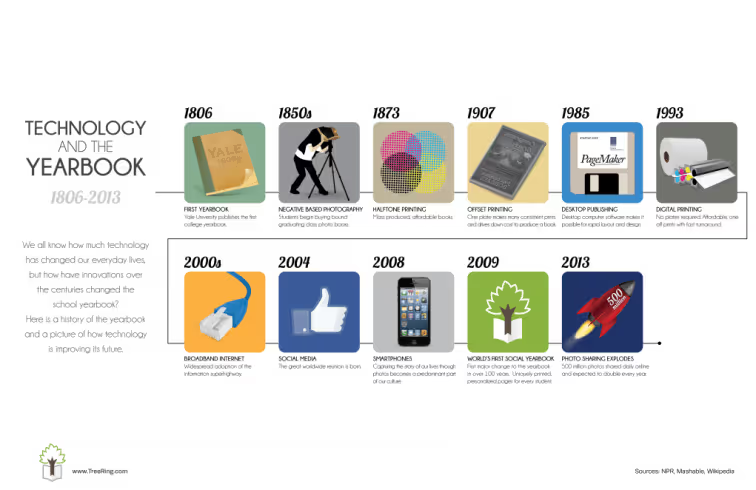
We all know it’s a steadfast tradition in American schools, but what exactly is the history of the yearbook? According to a story by NPR, a Boston photographer named George Warren leveraged an advancement in photographic technology called the glass negative process to easily create many prints from one photograph. Warren encouraged his student subjects to purchase multiple portraits, share them with each other and then turn those collections of portraits into professionally bound books. The “Warren Yearbook” was born. The National Museum of History in Washington D.C. has the 1860 Rutgers College Yearbook on display, an example of a Warren Yearbook.
1900s and the printing press
The next big shift in the history of the yearbook came in the early 1900s with the invention and adoption of the printing press. Those books that were previously hand bound, one of a kind albums, could be mass produced with the creation of printing plates. Costs dropped, making the yearbook more accessible to schools and students from all walks of life. The stage was set for the growth of the traditional school yearbook
The computer age
Between 1985 and 2008 an explosion of technology brought on massive changes in the yearbook’s history, like desktop publishing, digital printing, social media and the widespread adoption of digital photography. The computer age disrupted almost every industry in the world including incremental improvements to the yearbook. Desktop software made it easier for schools to layout yearbook designs and digital photography provided a larger variety of shots from throughout the year.
The social yearbook
In 2009, with the mass adoption of social media and its prevalence as a part of the American culture, the yearbook made its first major shift in over 100 years. Digital cameras and innovations in online software make it easy for students and parents to create their own memories and add them to their uniquely printed version of the yearbook.

10 Ways to relieve adviser burnout
It’s second semester, and we’re exhausted. Book fairs, grading, packing lunches, classroom celebrations, and family obligations are fantastic. We love them. They also wear us out. Layer the laudable task of gathering storytelling photos and husting the greatest yearbook your campus has yet to see, and it could be too much. If you're a team of one or two (or forty-two), yearbook adviser burnout is an especially strong possibility.
Treering staff member and yearbook mom Tevis D. said, “It’s okay to be not okay.” We just hope you don’t remain that way.
Remember your why
It’s a privilege to be entrusted with this task! It’s the opportunity to capture meaningful moments. The impact this year’s book will have cannot be measured now. It's not just about the visual elements, but also about the sounds of laughter captured in photos, the feel of the pages as you flip through them, the scent of freshly printed paper, and the breath of satisfaction as you see the finished product.
1. Express appreciation
Recognize and appreciate the efforts of your volunteers and the people on campus who champion your yearbook program. We know gratitude changes attitudes. It’s a great way to rejuvenate.
2. Recognize yearbook milestones
Celebrate throughout the yearbook production process to boost morale and maintain momentum. Upload your roster and toast yourself with a latte. Create a ladder with the team, then go out for pizza. Other steps to consider:
- Every x spreads marked complete
- Selling 25-50-100 yearbooks
- Having all the sports team photos complete by a certain date
Sometimes, a celebration can be as simple as a hat day or a classroom dance party. (Even high schoolers like a throwback GoNoodle video.)
3. Practice mindfulness
Incorporate mindfulness exercises into your routine to reduce stress, increase focus, and maintain a sense of perspective and balance. Schedule regular breaks during yearbook production to rest, recharge, and prevent burnout.
Ask for help… and get It!
If you’re creating the yearbook solo (or just feel like it), help is available.
4. Use your publisher
Treering Customer Success Manager Liz T. tells advisers, “If it is stressing you out—and yearbook related—contact me.”
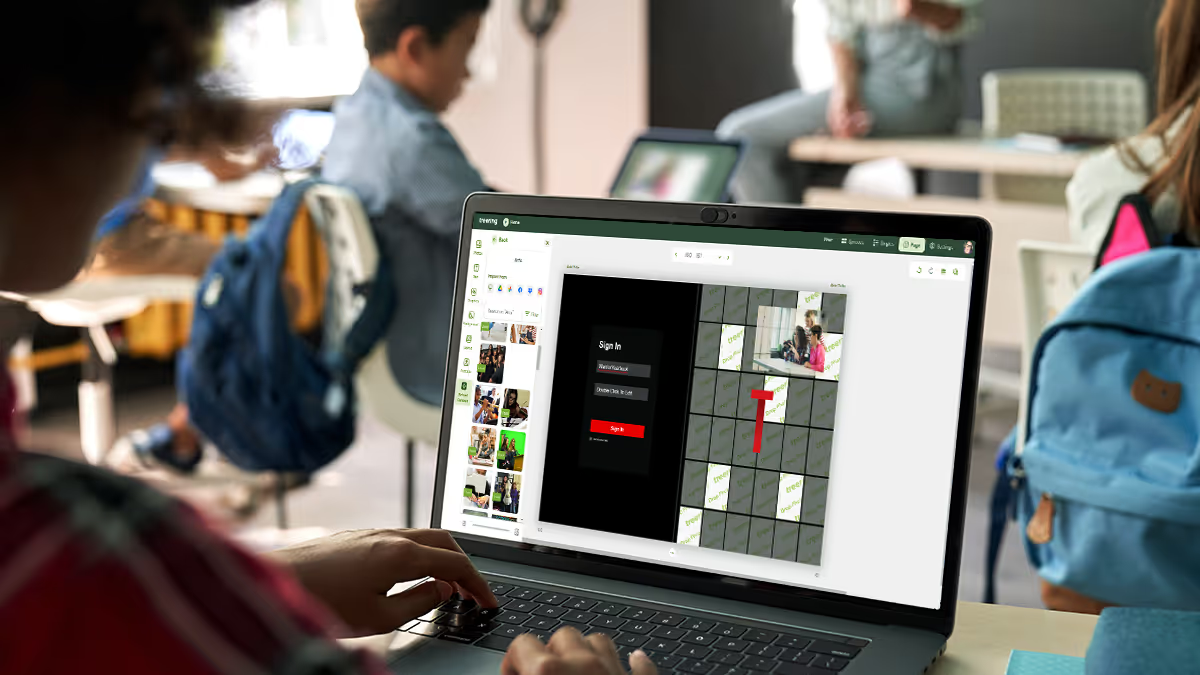
If you’re not a Treering editor, what are you waiting for? call your publisher and tell them you are at a standstill. They should have resources and training to help you move forward and create a workflow to simplify your process.
Newer to the yearbook game, you may not yet know what you don’t know, so it helps to follow a plan. Here are two popular ways to tackle a yearbook project:
5. Create a support network
Reach out to fellow advisers in your district, journalism mentors, or your publisher for guidance, advice, and support. Bring in experts as guest speakers to do some teaching for you: utilize your area journalists, alumni yearbook students, or even the Team Treering.
Strengthen your workflow
You can release stress from your mind by systematically addressing and resolving challenges in your yearbook project. It's about taking a methodical approach to problem-solving, allowing yourself to let go of stress, and approaching each task with renewed focus and energy. Remember: you don’t have to do it all at once!
6. Chunk your work
Breaking it down is more than a call to action on the dance floor: it’s a project management technique.
Here are some tips from the Treering staff:
Yearbook Specialist Karen B. said, “I like to stay on top of my pics and layouts: right after the event, I create the spread. This way, I'm never buried in spreads from October when it's January. And on slow event months, I catch up on other spreads.”
Yearbook Specialist Ali J. gives herself a cushion with her public deadline (yearbook purchases and custom pages). “As an elementary school advisor, I always set the deadline earlier than needed for parents to submit, then added a few days for the procrastinators (mostly for me),” she said.
The lone yearbooker
Identify and prioritize the most important tasks, focusing on those that contribute most significantly to the yearbook's quality. Typically, this encompasses your ladder, school portraits, and candid photos.
Some easy ways to simplify your workflow from Yearbook Specialist Kate H. include:
- Re-using layouts from previous years and changing out the headlines and captions
- Copy portrait settings from one class to the next
- Create photo and text styles
- Use pre-made page designs or templates
“One of the hardest things for editors to do is get content. Without it, you don’t have a book,” said Customer Success Manager Jason S. He helps advisers set up a system to collect photos from homeroom teachers.
Remember, saying no to additional responsibilities or requests that may overwhelm you is OK.
Managing a class or club
After you break down the yearbook project into smaller tasks, distribute them to your team. This way, there are no surprises on who is expected to cover what.
General tasks to delegate include:
- Photo management: uploading, crowdsourcing, tagging, selection
- Layout selection: templates, style guide
- Interviews: questions, scheduling
- Sections: people, athletics, student life, reference
- Copy editing and proofreading
7. Set clear expectations
We all need to clearly communicate roles, responsibilities, and expectations to volunteers, staff, and students from the beginning. The same goes for ourselves.
Think about the tasks you'll need to oversee, such as organizing photo assignments, designing layouts, and marketing the yearbook. (And remember, using Treering means we handle payment processing, yearbook sorting, and order tracking. Phew!)
8. Receive (and share) ongoing training
Find training sessions and shareable resources for inspiration or to fill in knowledge gaps. It may seem counterintuitive to add something when you’re feeling overwhelmed. Sometimes, an outside force (hello, inertia) is the change we need to pivot in a more positive direction. Our go-tos include:
If you are part of a class, club, or committee, use these opportunities to up your skillset as team building. Oreos also help.
9. Use automations
Embrace the ways tech can help increase efficiency. Treering’s software helps you create polished layout effortlessly by
- Auto-flowing portraits from any photographer
- Laying out your photos in a professionally design yearbook spread

We tossed the orange wax pencils and scaleograph for a reason!
10. Addition by subtraction
Sometimes, to move forward, we have to take a page from the Oregon Trail playbook: jettison what’s holding you back and keep moving forward.
These strategies can help you navigate the challenges of yearbook advising while staying motivated, resilient, and passionate about your role as a memory-maker and historical record preserver. Say no to adviser burnout and yes to another great year(book)!

Designing divider pages
Yearbook divider pages are just that: they divide the book topically. Generally showstoppers, these spreads share similar layouts as they introduce the content within while reinforcing the yearbook theme. While they aren’t the pages over which students argue for editing rights, they hold deep editorial power. Divider pages enforce the book’s identity while giving each section a voice.
Use dividers to develop your theme
Yearbook theme development starts on the cover and flows through the book visually and verbally. It wows on designated theme pages. These pages include:
- Opening and closing
- Table of contents
- Divider pages

Independent of the book, these theme pages form a cohesive “brand” package for your year. They repeat and reflect cover elements. They have the same voice. They develop the story of the year through copy and visuals. Each divider reflects the theme and shows how it impacts that section.
Do epic dividers mean you no longer have to include theme elements throughout the book? Think again. They’re just one more way to level up your design.
An example from Magnolia Middle School
From the start, the book is gold and black, with pops of the school color, red. The simple title page has the theme "Stay Gold" and the school information. The iconic 50-year-old Magnolia Grove walkway is the only original part of the school remaining after a major renovation. The yearbook team re-visits the grove for the closing page.
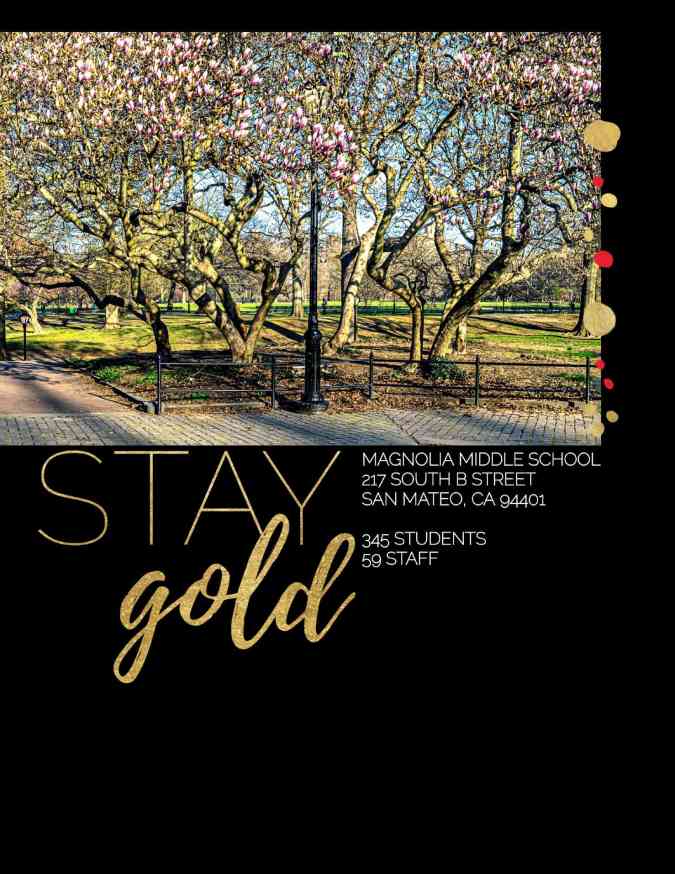
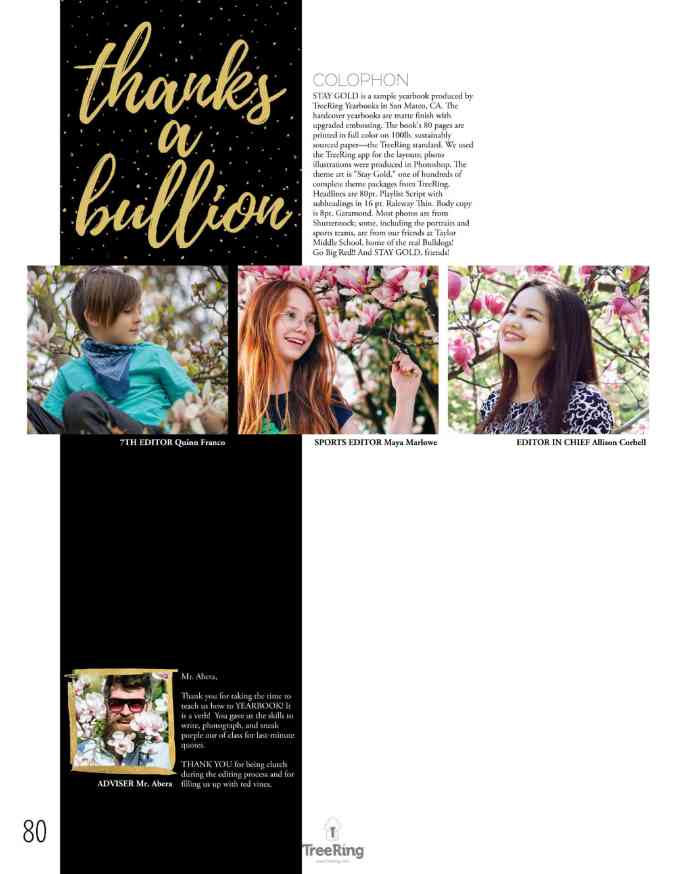
Here are the divider pages. Notice how they created a unified narrative:
- Magnolia repeats key elements: script font, circular callout for pull quotes, and gold dots.
- The new building is the visual feature and showcases how students impact each area.
- Wordplay: “The Golden Age of the Bulldogs,” “The Gold Standard,” “Shining Example,” “Shine On,” and “Thanks a Bullion” all tie back to the book’s theme, “Stay Gold.” (Fun fact: the book is built using Treering’s free yearbook theme with the same name.)


Essential yearbook sections
Like a table of contents, divider pages help readers navigate the yearbook. They help reset and refocus readers.
Most yearbooks include designated sections for:
- People (portraits)
- Academics
- Student life
- Organizations and clubs
- Athletics
- Reference (index, ads, and teams)
You may further divide with lower/upper school, fall/winter/spring sports, or even subject dividers for larger campuses.
Creating divider pages
Consistency is key when designing divider pages, OK any yearbook spread. While each divider should highlight a unique section, they should all share common design elements to maintain a cohesive look. These elements can include using the same fonts, color palette, and layout style across all dividers. Repeating theme elements, such as graphics or photo styles, help reinforce the yearbook's identity while keeping readers oriented.

What should I do with all my child's art?
Dear Mama, you're not alone. Many of us look at the creations in our children’s portfolio and think, “Now what?” The fridge is covered. The more ambitious among us swap out art in frames, while others load up bin after bin (or just chuck it in the bin). We have an art display idea to help you preserve your child's memories.
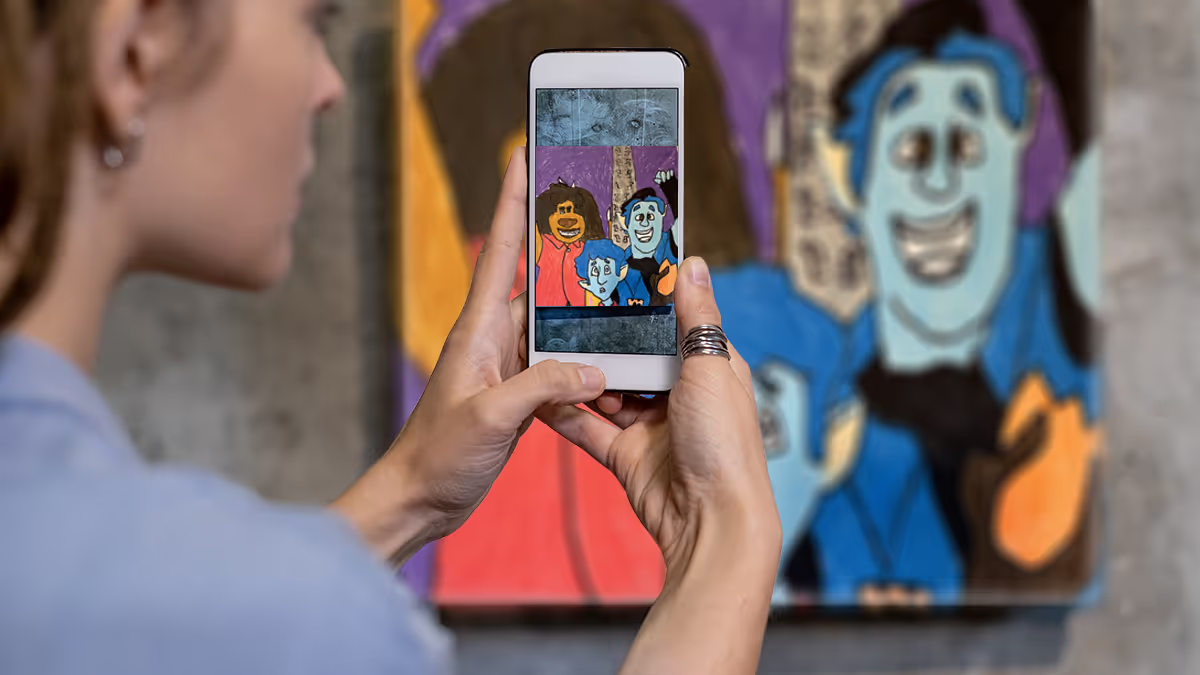
How to photograph your child’s art
The number one rule in photography applies here: get your lighting right! Eliminate shadows and flares by having multiple points of lighting. Natural lighting by a window is best.

Second, you’re going to want to make sure your camera angle is congruent to your art. (See, that high school geometry class has real world application!) This gets rid of distortion. You can make slight adjustments using your camera app.
Personalized pages
Now that your child’s art is digitized, do something with it!
Since every Treering yearbook comes with two, free personalized pages that print only in your yearbook, you can create a mini-gallery to display paintings, sculptures, and sketches without giving away more real estate in your home. (You can also add more pages for homework, family vacations, and events.)
Fast forward to high school graduation: all your yearbooks are lined up and you can show off your child's progression in penmanship, Scouting, or science fair.

Instead of suffering from mom guilt, you can display your child's year in art forever.

Annual yearbook editor spread design contest
Calling all Treering yearbook creators! It is contest time. Share your best designs for the 2025 design contest—collage, academics, athletics, modular, portrait pages, superlatives—we want to see them all.
Entry period
The submission period is March 4-18, 2025. Submissions will close at 11:59 PM PDT.
Eligibility
Entrants must be 18 or older and a current editor at a US Treering school for the 2024-2025 school year.
To participate, complete the submission form and include a screenshot of your favorite yearbook spread. A yearbook spread is two-facing pages. Incomplete entries will not be accepted.
Click here to enter the contest
Winner selection and notification
A panel of yearbook parents, journalism educators, and graphic designers will select the winners. Judging criteria include:
- Layout design
- Storytelling
- Visual elements and their relevance to content
We will notify all the winners via email and phone on Monday, March 24, 2025.

Prizes
One Grand Prize winner will receive a $500 Amazon gift card, a $200 pizza party, and 10 free yearbooks for their school.
Five Runners Up will each receive a $50 Amazon gift card and three free yearbooks for their school.
By Friday, April 4, winners will receive gift cards via the email provided in the form. The free book code will be under “free books” on your school’s editor dashboard.
Release
By submitting your yearbook spread, you have verified the approval of others pictured, and you approve Treering to use your name, write-up, and school name for any marketing purposes, including but not limited to treering.com, social media, and mass media.
Contest FAQs
I’m not 18. How can I enter my spread?
Your parent or yearbook adviser can enter on your behalf.
Do I have to have social media to enter?
You do not need social media to enter our annual design contest. Simply upload a screenshot of your favorite spread from your computer or phone on the entry form.
How do I get a list of all the winners?
2025 Spread design contest winners
Do I have to purchase a yearbook to enter?
No purchase is necessary to enter.
Where can I see past spread design contest winners for inspiration?
We invite your to browse the past winners and judges comments to see what resonates each year. Keep in mind there's no magic layout to win.
2024 Spread Design Contest Winners
2023 Spread Design Contest Winners
2022 Spread Design Contest Winners
I have a question that is unanswered here. Who do I ask?
We'll be happy to answer. Email marketing@treering.com

7 yearbook traditions we love
Building a yearbook program relies on building traditions with your staff and school community. When we build school traditions, we create a culture and expectations while transmitting values. That doesn’t equate with inflexibility, rather it provides a guide within which we ebb and flow. While the greatest tradition is the yearbook itself (more on that in a second), here are six others to build a lasting program.
An American institution since George K. Warren took photos of graduates in the late 19th century and sold them as prints to share, yearbooks are the definitive school tradition. What started off as a college-only record book now extends to elementary schools.
This adviser has watched students from world history classes grab yearbooks from the idea library and scour copies from other schools while awaiting the bell to ring. With no connection to the students, these school desk critics compared how our programs—such as ASB, athletics, and the arts—matched up with theirs. They evaluated the theme, mainly the visual components, and gave me a three-minute critique. [Pats self on back for not laughing.]
1. Staff traditions
Yearbook wedding
Trending with middle and high school staffs, yearbooks weddings are a pre-production celebration where students pledge themselves to the task.
- The yearbook staff writes vows. This can be as simple as providing a positive atmosphere and completing assignments on time, or as specific as SMART goals for coverage and sales.
- The adviser invites parents and stakeholders (admin, student leadsherhip, coaches, parent org leaders) to attend
- At the ceremony, students recite their vows and receive a ring
- Everyone eats cake
#Yerdsgiving
First of all, yerd means yearbook nerd and it’s polarizing: people loathe or love it. (For those of you playing along at home, I'm the former.) Regardless, #yerdsgiving is the annual gathering of journalism students over food before Thanksgiving break. Some students lead crafts or games, some practice the art of gluttony. Most take the time to craft thank you cards to school staff and students as well as vendors and parents who helped the yearbook team gain momentum at the start of the year. This yearbook tradition is also an avenue to invite alumni to inspire your current staff or even families to celebrate.

Holiday gift exchange
While it seems like you have a gift exchange for every group with which you’re involved, keep it simple:
- Hold a re-gift exchange where students bring in something they received and don’t want.
- Exchange variations on a theme such as socks or snacks
- Put dollar store stockings up with 3x5 cards so classmates can write notes of encouragement
Yearbook banquet
Being on yearbook staff has to have perks, and one is a fancy-pants dinner before distribution. (Please note fancy is a relative term: we’ve done everything from a chain Italian restaurant to a steakhouse to a revolving sushi bar.) Think of your typical sports banquet: the coach (adviser) stands and speaks a few remarks on the team then hands out the awards. Traditionally, the yearbook staff unwraps their yearbook and shares it with their family. It’s special because they have the first copies and it’s individualized time for parents to see all the work their child accomplished.
2. Thematic marketing
Theme surveys are a fun way to raise awareness that yearbook sales began as well as get buy-in from your school on the theme. While yearbook purists believe a theme should apply to one year only, you may find several coveted visual aesthetics from Treering Yearbooks’ theme gallery.
The big reveal can happen once you receive your printed proof and you can make videos and social media teasers with your staff. Some schools make it one of their back to school traditions to reveal the yearbook theme at the start of the school year and use it throughout to market the book and generate content by
- Making T-shirts and wearing them when they are photographing events (remember that QR code to buy!)
- Creating thank you cards, Google slide presentations, and posters via theme graphics
- Asking related questions via social media; for example, with a theme “Give + Take,” ask for multiple takes on the fun run or invite athletes give their top five songs for warm up
- Keeping everything yearbook-related in your theme colors
3. 3x yearbook coverage
Maximizing coverage should be a tradition for every yearbook staff. If we are truly telling the story of the year, it involves everyone on campus. From a yearbook marketing perspective, if students know they are in the book, they will want the book. If they want the book, parents will buy the book.
We love thinking of yearbooks as memory books—they are—they are also a component of the historical record.
4. Staff recruitment and announcement
Your yearbook team is a big deal. Say it with me, "We are a big deal!" Create yearbook staff traditions around recruitment and the announcement of who made the cut each spring. Some ideas include
- Host a party and pass out applications
- Crown your staff publicly (feather boas, sashes, and capes work well too)
- Publicize who is on your yearbook team in newsletters, on social media, and in the front office so parents, coaches, and prospective volunteers can get in touch with you
After all, your yearbook team is a big deal.
5. Freeze time
You don’t have to be Doc and Marty McFly to time travel. Year after year, yearbooks create a personal history; the yearbook might be a few hours of reading during summer, and when you fast forward five or ten years, it will be so much more. Moms, let’s face it, our yearbooks give our kids license to laugh at our hair, clothes, and priorities.
The value of a yearbook does not end at graduation.

6. Dedication
Does your school have a tradition of dedicating the yearbook to a member of your staff or community? If not, skip to the next section. This gets political.
A yearbook dedication could
- Thank a teacher for being a yearbook champion
- Recognize an administrator who is retiring
- Honor a member of the faculty who impacted the school community
- Be a blanket statement to a group on campus, such as the robotics team who went to the national championship for the first time
- Congratulate the promoting/graduating class
7. Yearbook distribution party traditions
Many schools have a special, extended lunch or tie distribution to an all-school event to celebrate the end of the year. A word of advice: if this is a new tradition for you, connect with school leadership early to plan your distribution day.
The good
A simple party with pens, tunes, and tables is all you need. Always invite non-buyers to include them in the signing. More than likely, they'll be the first to buy a book next year. (And if you're using Treering Yearbooks to publish, parents can still buy a book!)
Pizza, a DJ, and pens that correspond to class colors take it to the next level.
The extra
One K-12 school I know used to have students line up outside a bounce house. After they climbed up and slid down, they'd receive their yearbook.
Another elementary school invites the middle school cheerleaders to the signing party. They perform and pump up the 5th graders for fall.
Whichever yearbook traditions you employ, make sure they match your community. If you're just getting started, select one and own it. Once it's routine, add another.
QR Code is a registered trademark of DENSO WAVE INCORPORATED.
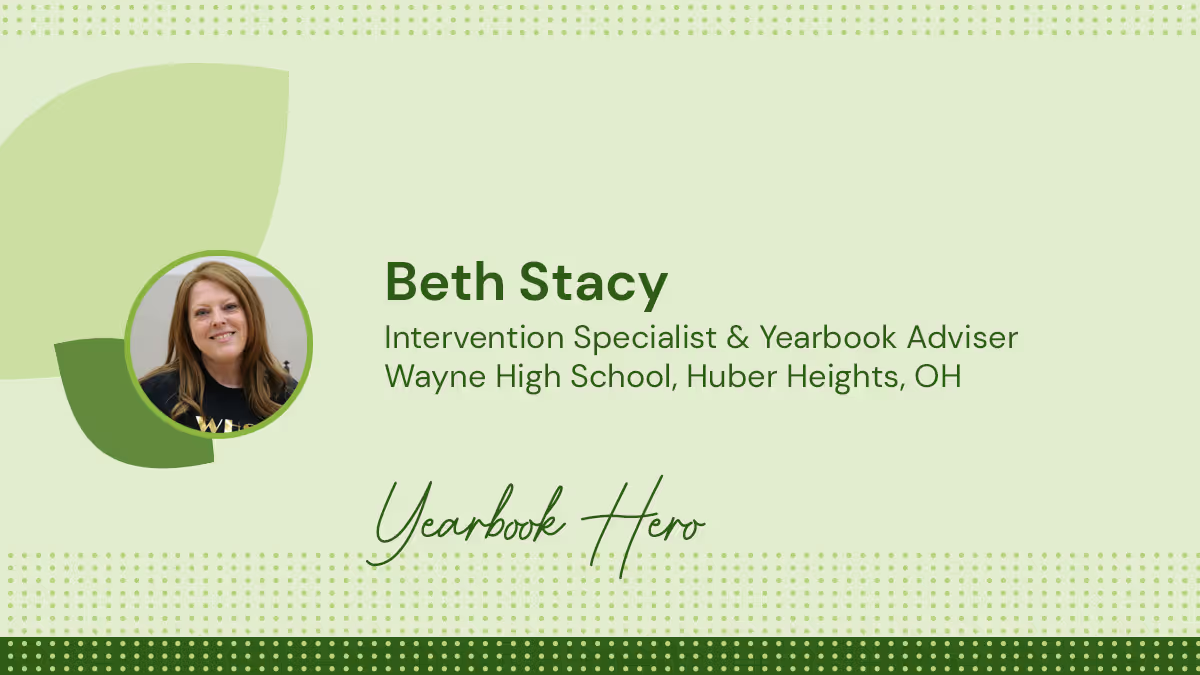
Yearbook hero Beth Stacy writes history
Treering Yearbook Heroes is a monthly feature focusing on yearbook tips and tricks.
Like many of us, Beth Stacy didn’t set out to be a yearbook adviser. As a special education teacher, she focused on reading intervention and built her reputation as a writing pro and Read 180 instructor. After moving from Florida to Ohio, her new principal asked her to co-teach the yearbook class because she wanted it to be more journalistic. The program was already under scrutiny: the district, concerned over a debt-burdened program, was ready to shut things down. In 2017, the team at Wayne High School moved to Treering, reducing the financial burden on the school and the stress of deadlines for the advisers.
Co-advising sounds like a dream. How do you make it work?
The business teacher and I share responsibilities. She and I split the class on Tuesdays and Thursdays. She focuses on visual skill development and marketing while I teach writing and interviewing.
During the first quarter, the four seniors lead teams. They divide the sports spreads and divvy up tasks. Within their teams, they choose how to break up tasks. For example, there are 92 band members and 32 Warriorette and they have to interview them all. That team assigned instrument groups to each team member (woodwinds, brass, etc.).
Second quarter, students determine if they want to work with a partner or solo for their next spread. As the year progresses, they grow more independent.
With a school of 1800, how do you ensure coverage?
We do a big book–250 pages. Also, we use the index report to identify students who are not in the book and brainstorm open-ended questions for student profiles inspired by Humans of New York. These Humans of Wayne profiles undergo a revision and editing process before going in the book and on the Signal’s Instagram.
Because we include prom, graduation, and our track team, from which members compete each June at the state finals and potentially at nationals, Wayne High School is a fall delivery school. For the first time, we are going to use Treering’s ship-to-home option so we don’t have to plan distribution during the summer for open house.
It’s the 75 anniversary this year for their yearbook–what are you doing to make it special?
My students are finding ways to link the past to the present. One of my editors created two spreads using the previous covers. We are missing ten years and working with the alumni association and hopefully the historical society to track them down.

The first yearbook has a write-up from the original editor. We will honor the previous teams who established and maintained the yearbook tradition as well as legacy athletes since we are a big sports school. Our head football coach is a first-generation Warrior and his son is a senior. Nearly two dozen members of the faculty are alumni and will appear with their senior yearbooks.
Teaching yearbook is such a different experience than being on staff as a student. I absolutely love it, but it is one of the most fun yet difficult classes I've ever taught!