Most popular







Subscribe to our blog
Most recent

Yearbook in 60 days: part 4 - proofreading and going print ready
This is the final installment in a four-part series on creating a yearbook in 60 days. By now, portraits and spreads are in the book, and it is time to polish both. Day 46-60 tasks center around communication to parents and the print process.

Yearbook (yes, it is a verb) along with us on Facebook, Instagram, and TikTok.
1. Custom page reminders
Marketing Rule of Seven aside, parents are busy. Teachers are solving the world’s problems. We need reminders (not the “loving” ones that are really sassy in disguise). Remember the parent purchase date you set during days 1-15? This is the date by which parents should customize and purchase their yearbooks.
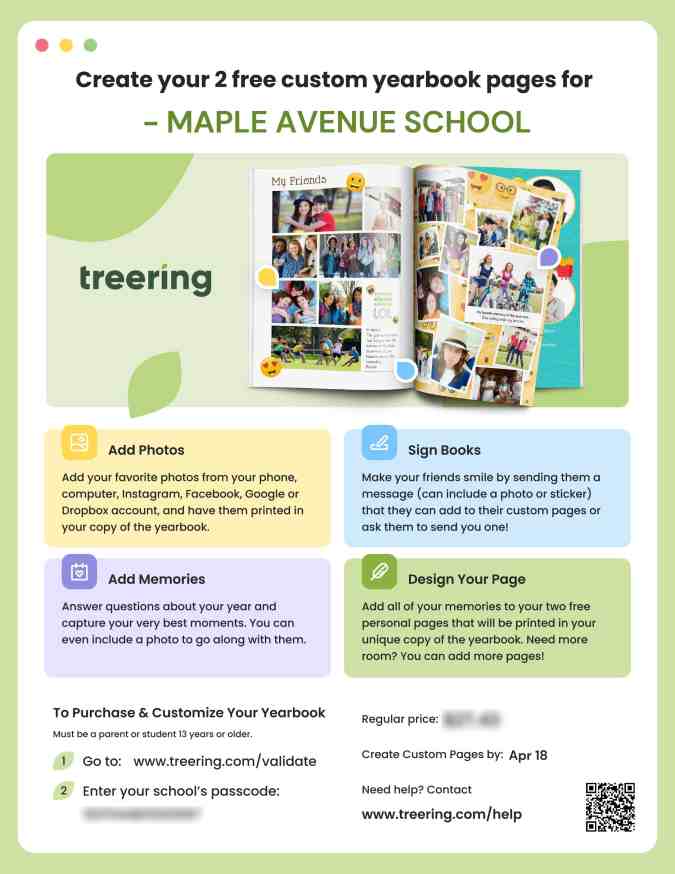
While parents do not have to fill their free, two custom pages with memories, a little education goes a long way. Here are a few ideas for reminders:
- Include a flyer in the monthly newsletter
- Share a video tutorial on your parent group’s social media page
- Create a virtual parent event aligned with one of Treering’s parent webinars to “attend” together
- Host a custom pages night and walk parents through the process
Custom page resources
Remember, you must use the login button to access the editor articles.
- Editor Video: Reviewing All Students' Custom Pages
- Parent Video: Creating Custom Pages with Page Builder
- Parent Video: Creating Custom Pages from Scratch with Page Editor
- Spring Parent Webinars: Yearbook Club
2. Make corrections
Continue using those PDF proofs and the page warning tray to manage duplicate images, low-resolution images, margin warnings, and spelling errors.

Page warning tray resource
- Editor video: Page warnings
3. Print ready process
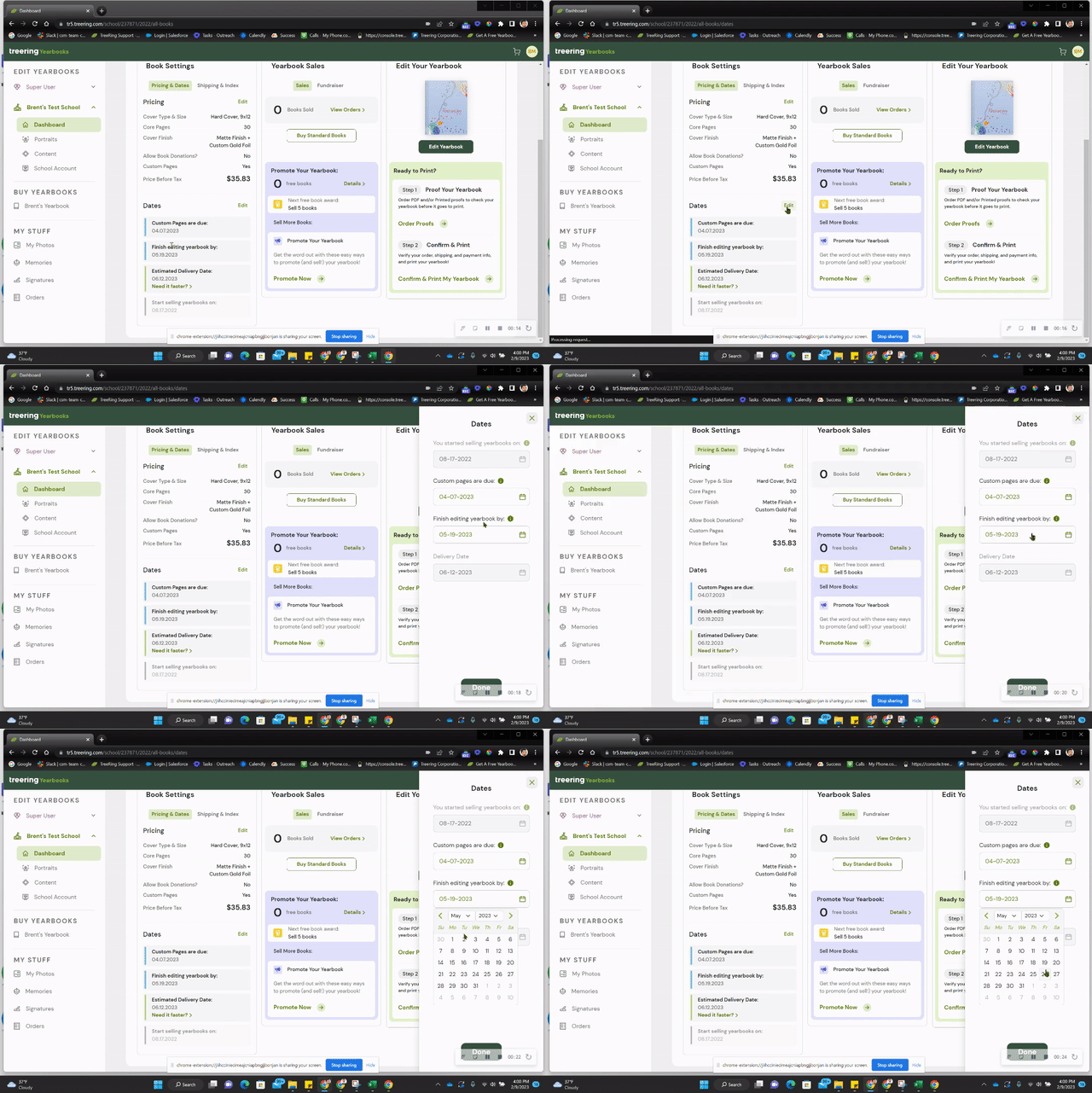
You tell Treering when to begin the printing process. When your Finish Editing Yearbook Deadline arrives, your yearbook does not automatically head to the printers. Remember, your three-week turnaround begins from the date you send the book to print.
It will take 15-20 minutes for you to complete the pre-print process below.
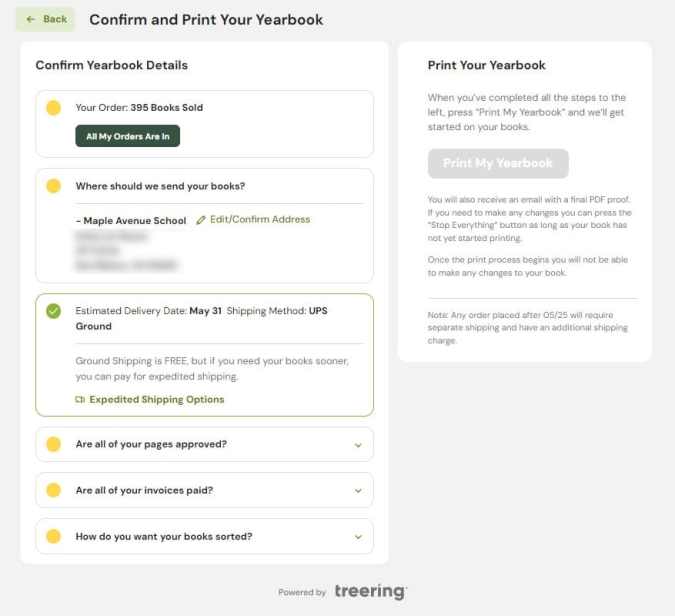
After you complete the checklist and select the dancing “Print my Yearbook” button (cue the confetti), you will receive an email with your final-final PDF proof and instructions if you find a grievous error and need to stop the printing process. There is an extremely short, blink-and-it's-over window to do this; it may cause production delays.
Sending your yearbook to print resource
4. Never say, “no.”
You will never have to turn away a student at a Treering school who wants a yearbook after the print deadline. With Treering, you can even order and personalize past years’ books.

Additionally, with the fundraiser and book donation options, you can ensure students in need have books as well.
Post-print ready resources
- Parent video: Buying a yearbook for a previous school year
- Article: After deadline orders
- Video: Fundraising disbursement options when setting your yearbook to print ready
- Case study: Yearbook hero Janet Yieh gives away yearbooks
Feeling adventurous? Plan a party!
Yearbook signing parties need not be extravagant: tables, pens, tunes.
Yearbook Signing Party Resources
You did it! How will you celebrate building a yearbook in 60 days? Be sure to tag @treering on Facebook and @treeringcorp on TikTok and Instagram to show us. Happy yearbooking!
Yearbook Hero TJ Soffera
Treering Yearbook Heroes is a monthly feature focusing on yearbook tips and tricks.
As Treering’s Yearbook Jedi, TJ Soffera helps schools escape the dark side of contracts and order minimums. While his business cards say, “Regional Sales Manager,” parents at his son’s former elementary school—we’ll get to that in a bit—know him as the yearbook guy. He joined the PTA to spend time on campus with his boys and intentionally be involved in their lives.
What is it like seeing the yearbook from both sides: creator and publisher?
As the yearbook guy, I love getting parents excited about the custom pages. They allow kids to tell their own stories and capture their unique experiences. I include personal touches in my children's yearbooks, like photos from trips and soccer games. Looking back at them, we can say things like, “That was second grade when we went to Colorado.” That's what's special to me about the books and their longevity.
On the flip side, I just love helping people. I love making their lives easier. So many schools that made the switch are debt-free, and it takes away so much stress.
Through the sales process, I've built countless relationships. Three people on my team once were parent volunteers I did a software demo for. It’s important for customers to see we are real people. We, too, are volunteering and working. It builds empathy.
Talk to me more about making lives easier.
Last year, I put the wrong year on the spine of the yearbook. The support team helped me fix it, order a corrected copy, and send it to the newly retired principal.
Mistakes can be corrected, and missing students can be added even after the initial submission. I really do believe this means the world to not only the kids but even more to the yearbook adviser. The person who made the mistake is kicking themselves, and we’re over here going, “No big deal.”
Level with me: why are you still doing the yearbook at a school your kids no longer attend?
Treering’s software is so easy that I don't need much help with it. Really. As long as you have pictures, you can make a book.
I am working to transition out of the role. I put myself in this position because I enjoy it, and the PTA president is great and helps me out. Together, we’re recruiting other parents to help with specific grades so someone can take over next year.
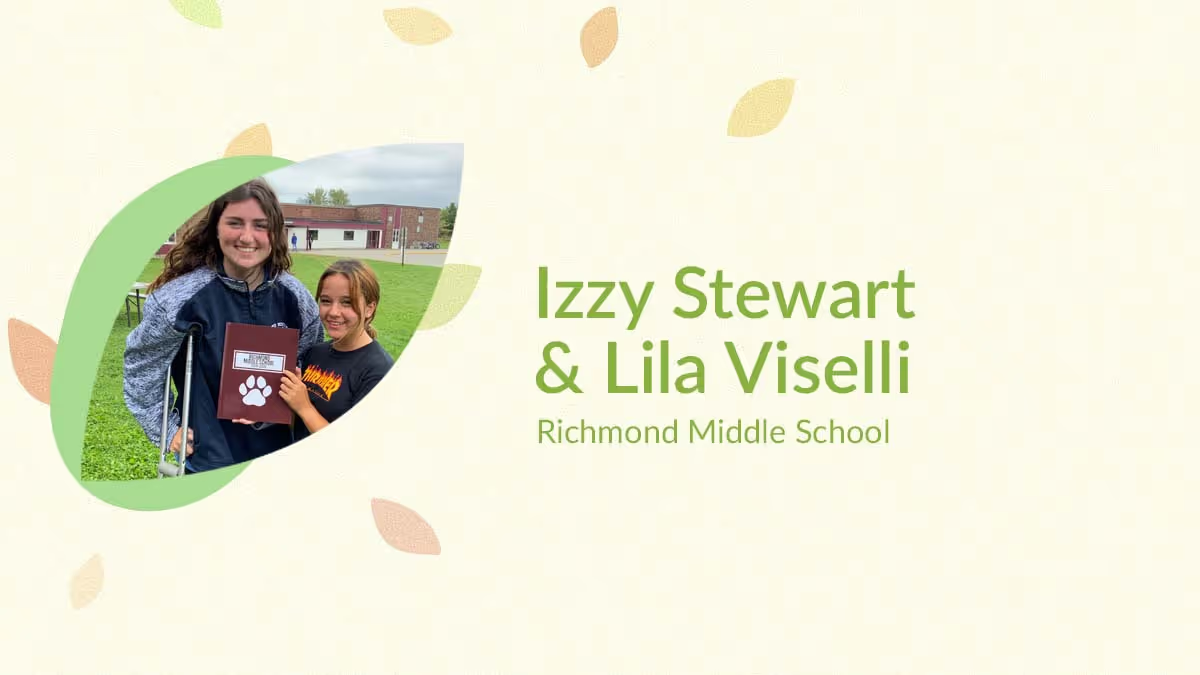
Yearbook heroes Izzy and Lila resurrect a yearbook program
Treering Yearbook Heroes is a monthly feature focusing on yearbook adviser tips and tricks.
This year we at Treering called on all our schools’ parents, teachers, and students to nominate yearbook heroes in a first-ever peoples’ contest: #YearbookHero. The yearbook callout contest was prompted by our empathy and true appreciation for our yearbook editors.
Students Izzy Stewart and Lila Viselli from Richmond Middle School, located in Richmond, Maine won first place in the middle school division of our nationwide contest; they were nominated by their adviser Becca Redman for their work in restarting the yearbook after a six-year hiatus—even when the pandemic hit and the girls had to work on the yearbook from home!
What does it mean to you to be Richmond Middle School’s Yearbook Heroes?
We all think it’s important to get recognized for the work you’ve done when the opportunity presents itself! And in this case, it was Treering’s #YearbookHero Contest. It was quite the surprise to get awarded for the yearbook, and it feels great to be recognized for all of the work that was put into it.
What was it like to bring the yearbook back after six years?
We were thrilled to bring the yearbook back and learned so much as a team - about design, collaboration, communication and time-management. It was a really rewarding experience that hopefully will help students in their other activities and classes. I think it would have been exciting under any circumstance, but we all felt even more satisfied with our work because we put it together during a pandemic, when we were all at home. We had to be creative. I think last year's book reflected lessons we learned the first year, and we see the book getting better with every edition.
How did you gather photos when you were at home? How did you involve and motivate your classmates to contribute to the yearbook?
Ms. Redman: I sent a LOT of emails and contacted parents on Facebook to ask permission to use their photos of school activities in the fall, and to contribute to the quarantine collage. At one point I also gathered the entire team of middle school teachers in a Zoom meeting and took a screenshot of all our smiling faces. It was captioned with a "We Miss You" message. I think that was special for the students, and will definitely be a memento from an unprecedented year.
Izzy and Lila: When we were at home, we’d email a lot of people consistently, including classmates and coaches, in order to motivate them to send us pictures. We also contacted parents to see if they could send us pictures that they’d taken of students and events.
Ms. Redman, how is Richmond Middle School’s Yearbook Club going?
This year, things are going really well! We are still in the planning stages, but definitely learning from the past. For example, after taking photos during Spirit Week and Halloween, we created those pages immediately at the following meeting. I’m sure this will pay off in the spring. One of our past mistakes was definitely leaving a lot of the actual book editing until the end. I'm glad to have a lot of 6th graders expressing interest in the club this year and hopefully they will stay with the club through middle school and be leaders in the future.
I am also lucky to have some really proactive team members who take initiative to take photos during important events—I don't need to remind them! Since Izzy and Lila have graduated from 8th grade, they are definitely missed this year! With that said, I have plans to bring them on board to come and help me teach the current middle schoolers a few key Treering skills. We’ll be working on portraits soon, so that’s definitely something we’ll be focusing on with Treering in the near future.
Izzy and Lila, now that you’re in high school, what advice would you give younger students who are involved in the yearbook?
Never give up and push through obstacles the best that you can. It’s always ok to ask questions and get help! For us, it was very rewarding in the end to bring back the yearbook by using Treering and for everyone to give us positive feedback. It feels good to leave middle school knowing that we brought the yearbook back and left them with a solid foundation to build off of this year and for years to come.

Yearbook in 60 days - part 3: yearbook design
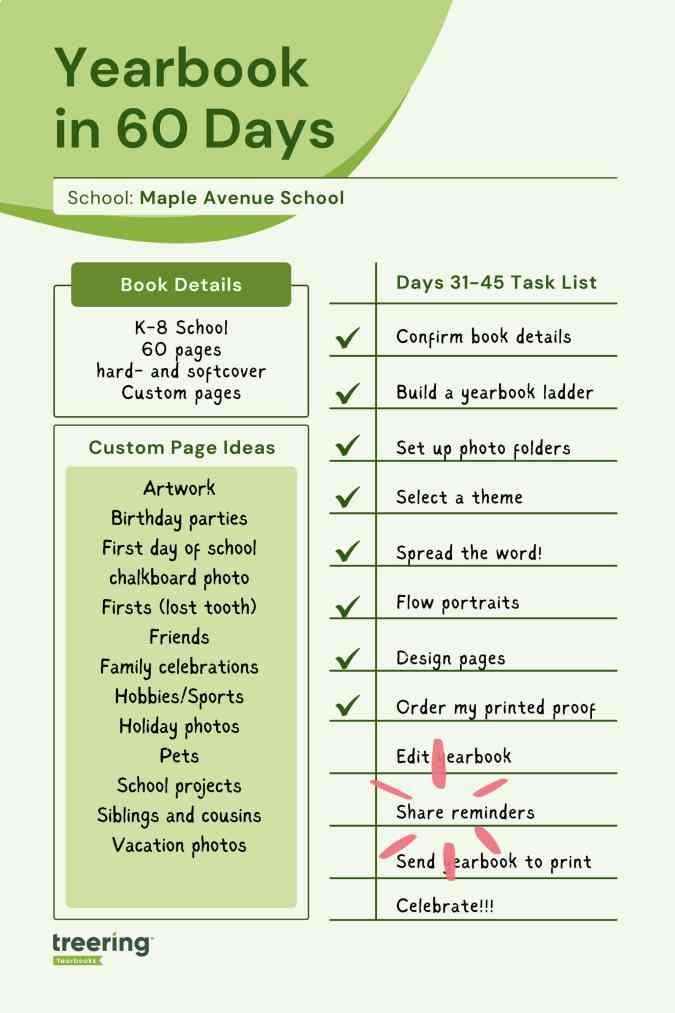
Two blogs ago, we began our journey to start and finish a yearbook in 60 days. From establishing a ladder and crowdsourcing structure to flowing portraits and adding in fall events, the first month yielded a near-complete yearbook. These next fifteen days of our adventure include proofing, promoting, and packing in spring events. All the resources you need are linked below (for help center articles, you will need to log in to the editor help center).
Yearbook (yes, it is a verb) along with us on Facebook, Instagram, and TikTok.
1. PDF proofing
Just because we are speeding through the yearbook creation process doesn’t mean we will be careless. Proofing tools such as downloadable PDFs and a free, physical cover-to-cover proof of your yearbook are free through Treering.
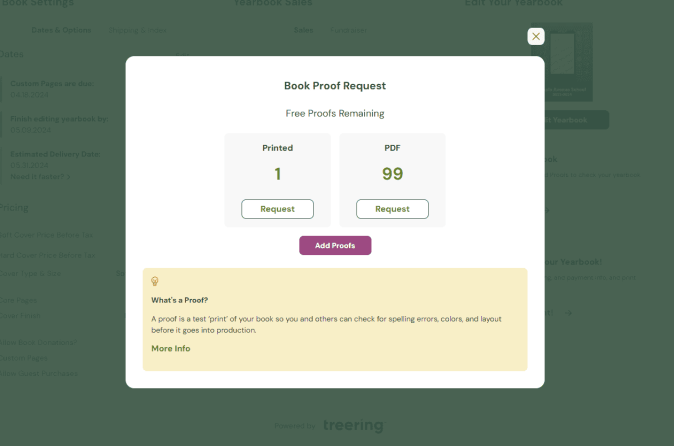
Let’s start with PDFs. English teachers everywhere will tell you errors that are missed on the screen often pop on paper. Read any copy (stories and captions) aloud to assess for tone and errors that digital proofing tools missed. These are low-resolution (the actual print file size might crash your computer), so you can download them quickly.
Use your PDF proofs to also
- Triple-check your portrait pages: correct spelling of names, the accurate placement of students and teachers in classes or grades
- Ensure faces aren’t lost on the edges (margins) or in the middle (gutter) of your spread
- Students are visible in the photos: sometimes, a photo box is the wrong size, and the faces are either huge or unrecognizably small. When possible, try to make all faces on a collage spread the same size.
- Show sneak peeks to your buyers - when parents see their child is in the book, they will buy the book!
Pro tip: use as many of your 99 PDF proofs as possible!
Yearbook editing resources
2. Design pages (spring/second semester events)
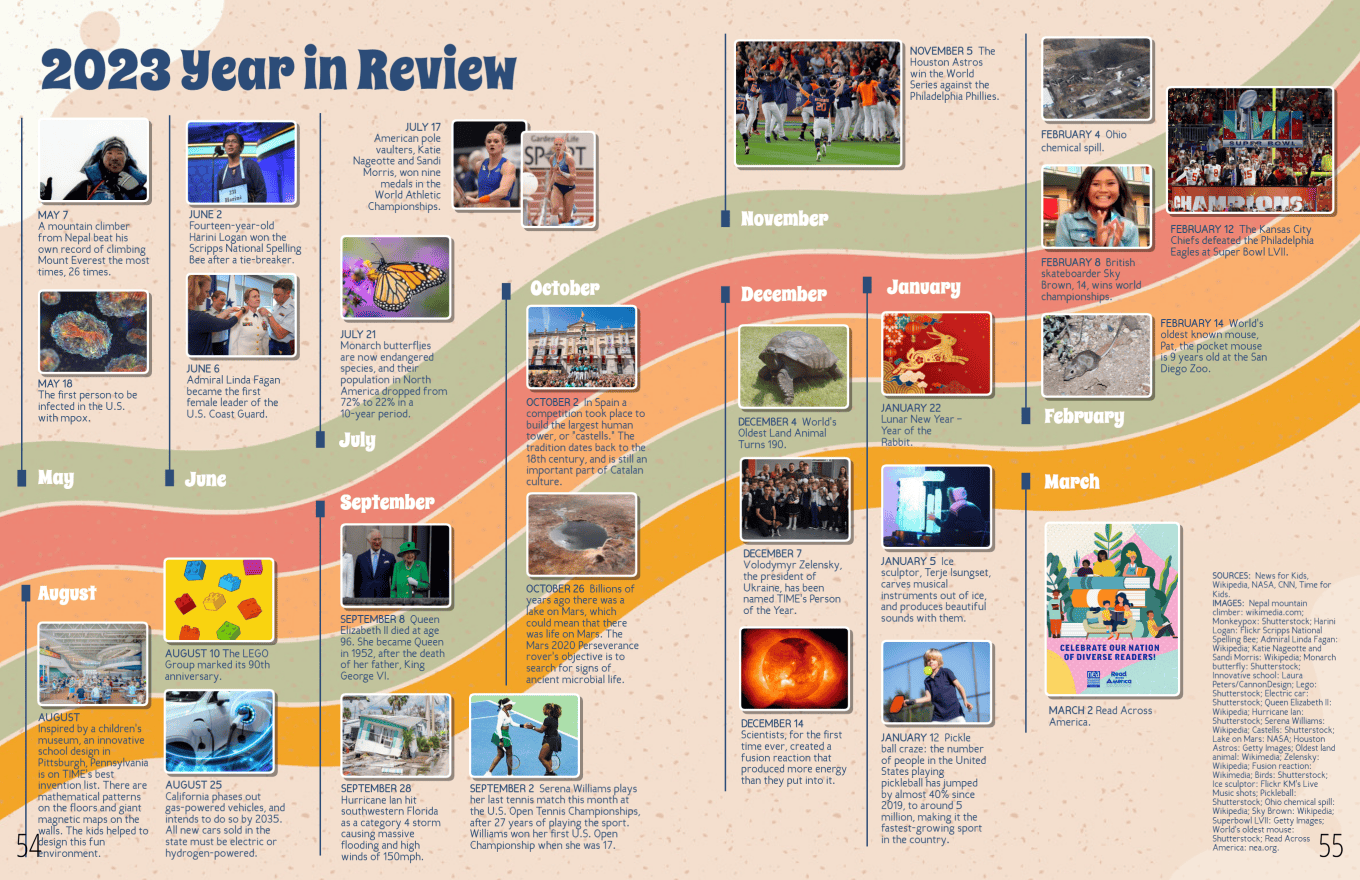
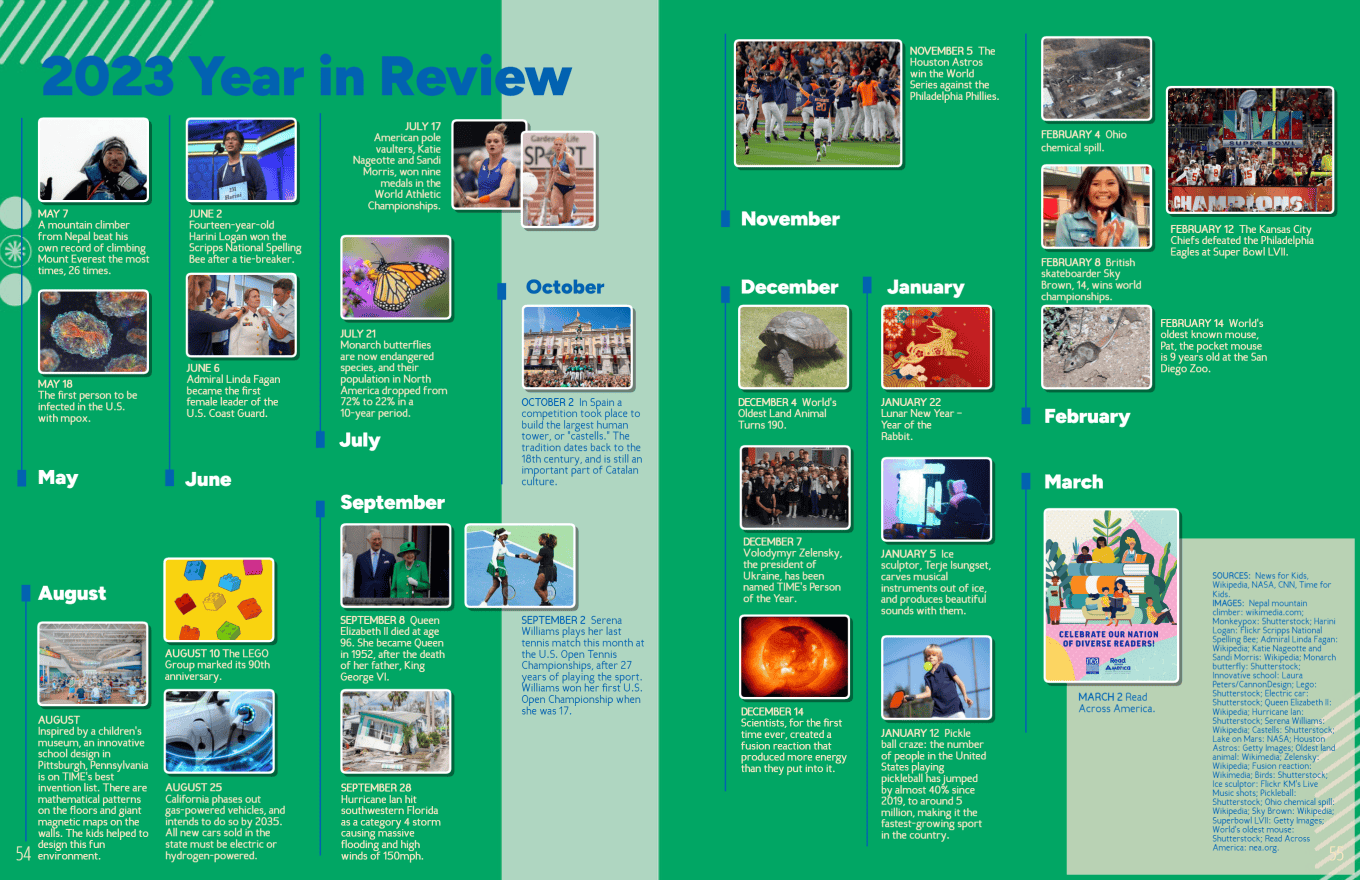
Last time, you learned two ways to design. Because the second semester is unfolding as you build your yearbook, it may be easier to collect photos. This is the time to evaluate those first semester spreads: if they are not full by now, combine events and re-allocate space.
Coverage resources
- Blog: Six Ideas to Fill Pages in Your Yearbook
- Article: Adding Pre-Designed Pages (You must login to the editor Help Center to view)
3. Purchase reminders
In these remaining 30 days, up your promotion game by doing at least one thing a week to share about the yearbook:
- Reach out after each school event with the appropriate photo share link and email
- Call or email parents of students who are in the book three times and have not purchased
- Have a contest: the grade or homeroom with the largest percentage of purchases earns extended recess
- Remind purchasers to customize their yearbooks (more on this next time)
- Ask campus influencers (ASB, PTA/PTO accounts, athletics) to hype the yearbook
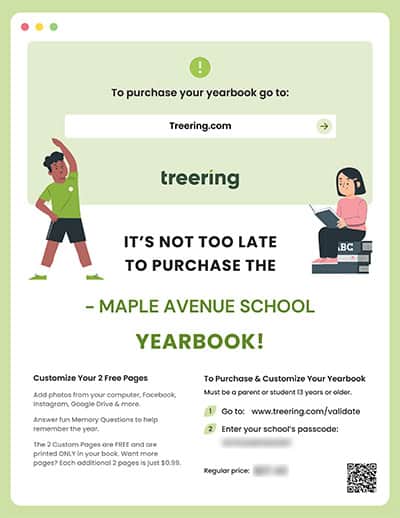
- Have flyers at a school-wide event, such as the band showcase
Yearbook sales resources
- Google Slides: Customizable Flyers
- Article: Tools for Promoting Your Yearbook
- Blog: 5 Social Media Posts to Sell Yearbooks
4. Printed proof
Treering’s Marketing Manager Megan P. likes to say, “Works in progress welcome!” Because you need your printed proof in hand before your final deadline, order it now. It can take up to 18 business days for this yearbook freebie to arrive.
With portraits and fall events in the book, there is plenty to evaluate. Use your remaining PDFs for copy and photo edits.

Pro tip: When my printed proof arrives, I take a Sharpie and mark it up. Then, I use it as a tool to clean up each spread one by one.
Proofing resources
Yearbook with a friend
Involve a second or third set of eyes during the proofing process. Potential yearbook proofing heroes include:
- Front office staff (they know all the things)
- Student TAs
- The secretary of the parent group
- Coaches and club leaders
- A friend who owes you a solid
Next time, we’ll send the yearbook to print and prepare for distribution.

Teaching yearbook: design inspiration from anywhere
Treering’s click, drag, drop, and done tools aren’t for every design team. In an age of visual search, Pinterest, and AI, we advisers are refining strategies for guiding students in visual theme development. For those who take a more hands-on approach, there are generally two blockers:

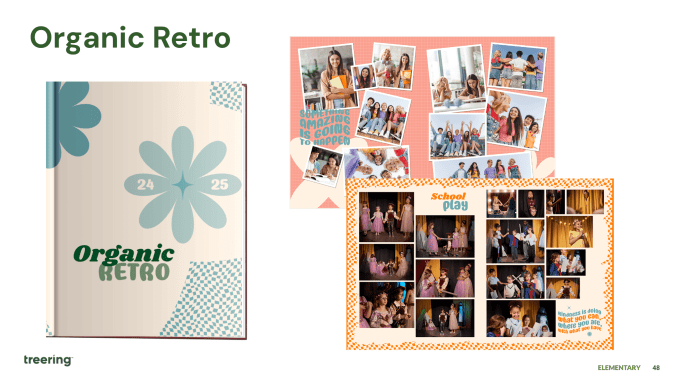
Where do I find fresh design inspiration?
Look at the graphic design on visual media as a springboard for ideas, not as a rigid template to follow. These real-world examples can provide valuable insights into current trends, color palettes, typography, and overall composition.
Here’s how you do it with your yearbook class or club:
Two real-world examples and applications
Look at the Mendocino Farms' website: its layout, color scheme, and font choices. In the video below, yearbook creator Liz Thompson shows how to recreate similar elements within the yearbook page in fewer than four minutes.
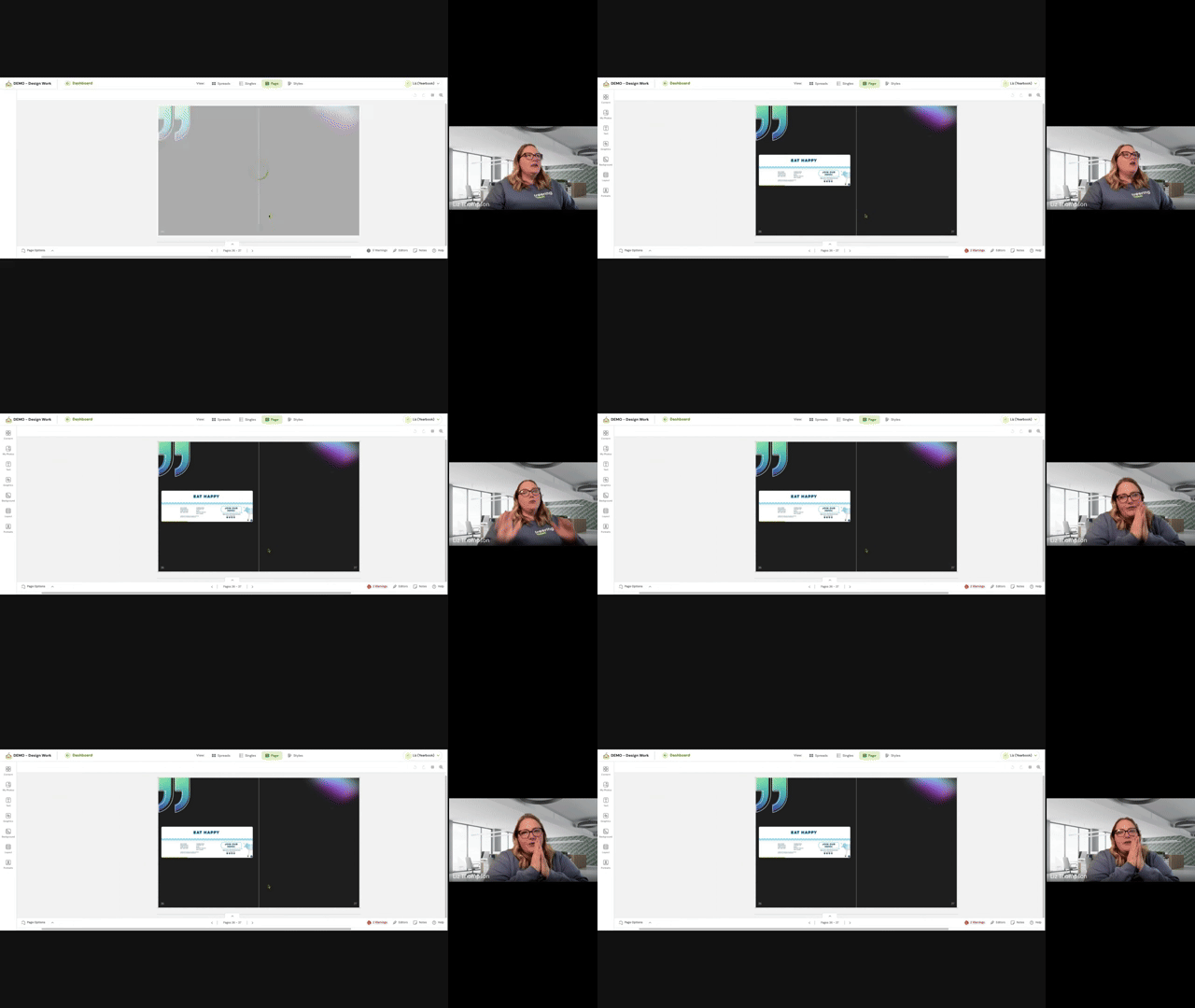
Through practical demonstration, Thompson translates real-world inspiration into tangible yearbook designs.
Our second example features a magazine layout. White space, typography, and image placement could easily be adapted for a yearbook page.
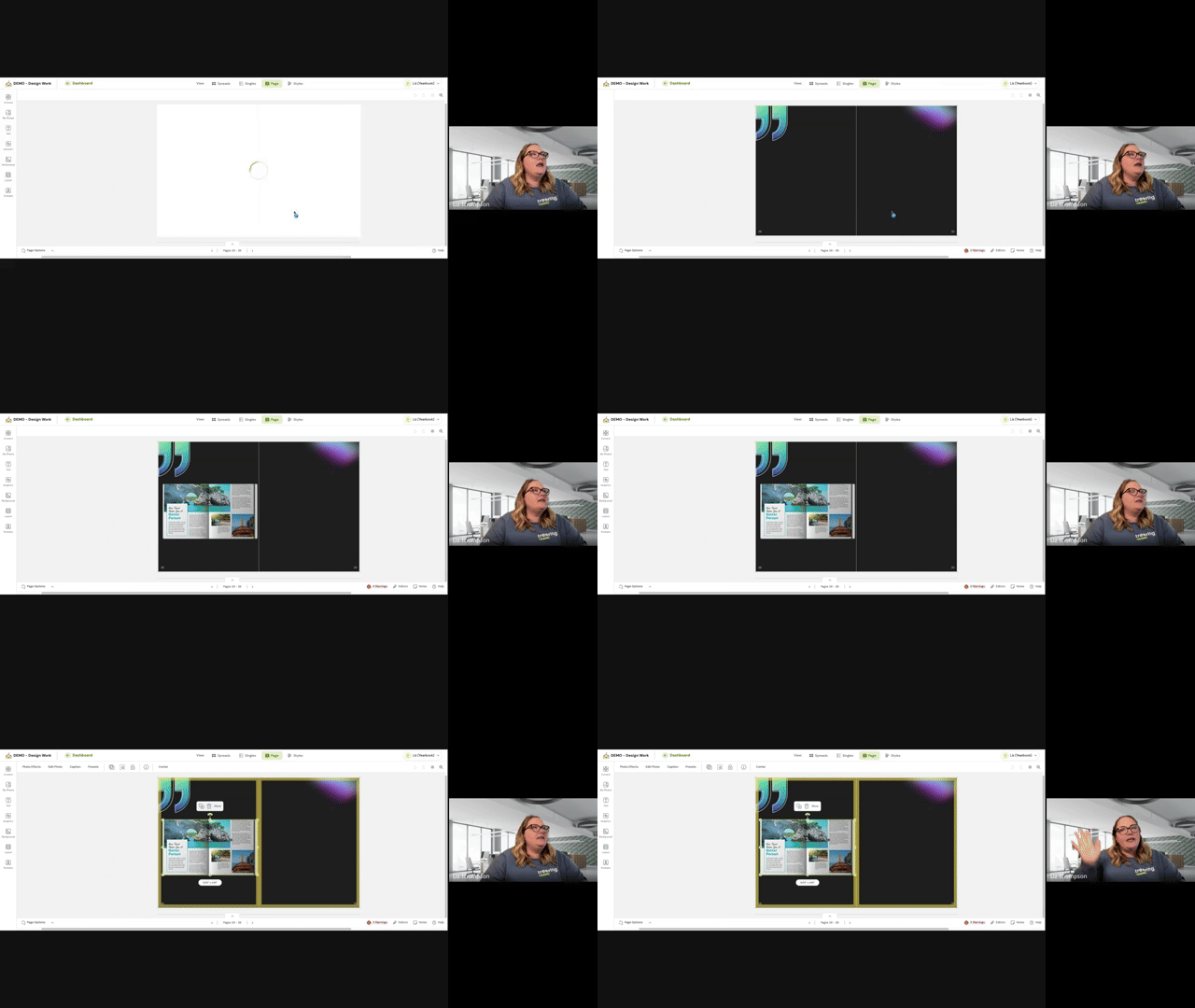
Notice how Thompson uses the design's overall flow and visual hierarchy to draw the viewer's eye to specific areas of the page.
Treering-specific tricks
Bringing outside inspiration into your yearbook doesn’t have to be a manual process. Treering engineers incorporated tools to simplify the DIY design process. Our top three include:
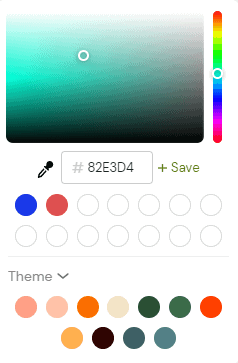
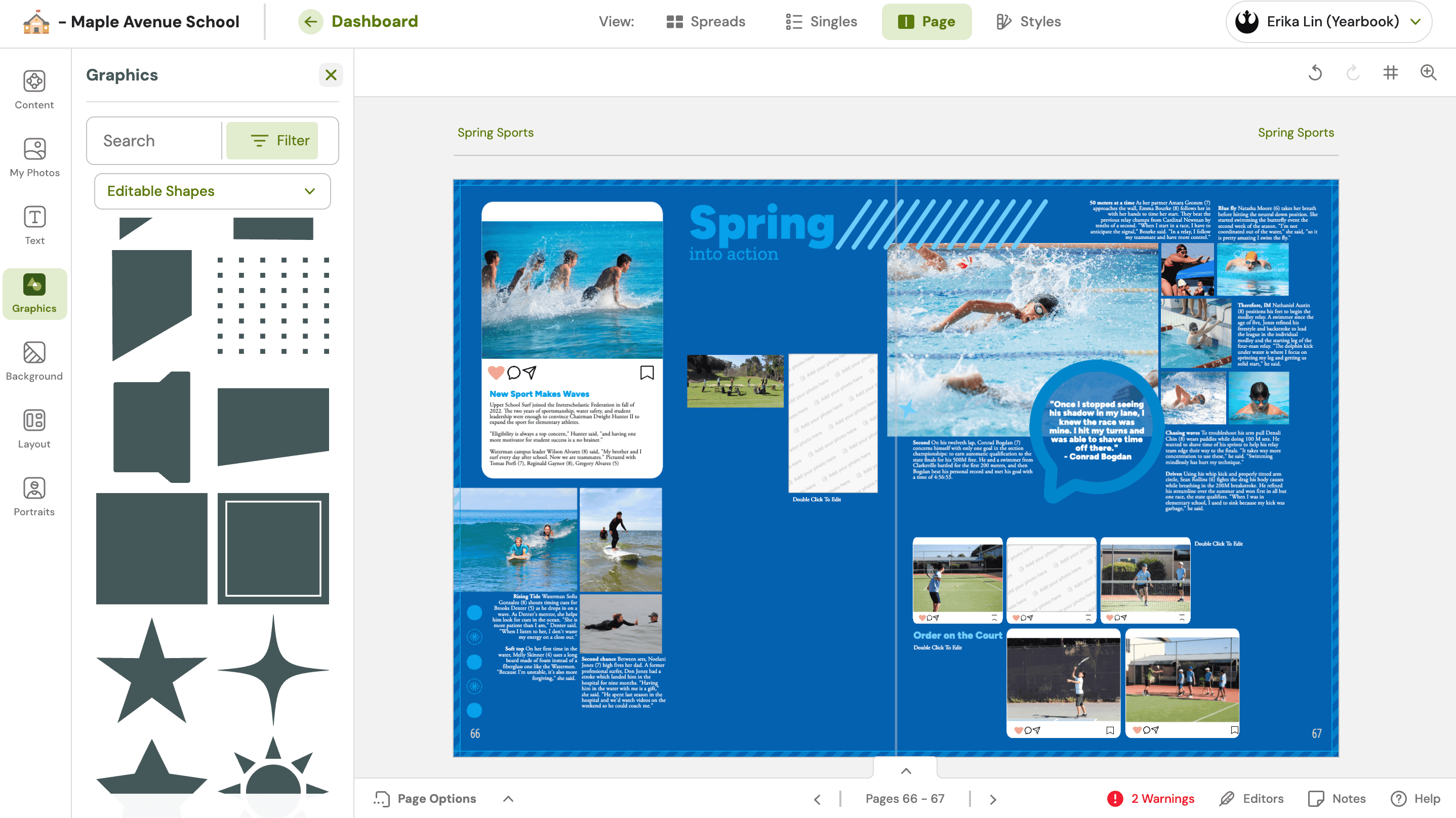
Using the color picker eyedropper
Extract colors from an image and apply them to the yearbook design. This technique allows for a more cohesive and visually appealing color palette.
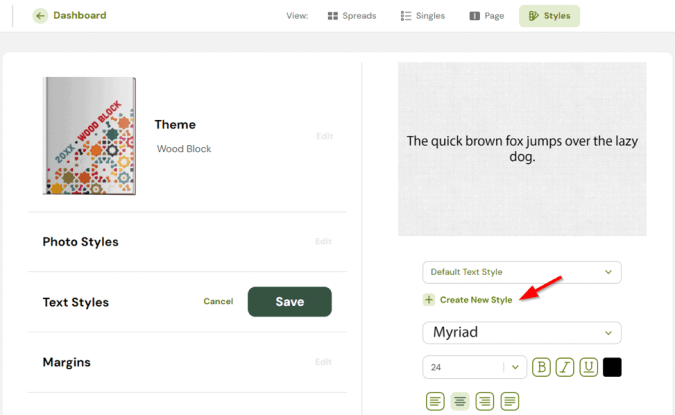
Create and Apply Text Styles
Adjust font sizes, line spacing, and text alignment, then save it as a headline, subheadline, accent—wherever you want to name it—a style you can apply with a click.
Add editable shapes
Incorporating various graphic elements—lines, boxes, and illustrations—can serve as an accent for emphasis or visual separation if you’re using modular design.
How to use this at your next yearbook class or club meeting
As a group, watch the two instructional videos above. Follow Thompson's instructions to create a similar look.
Then, have students bring in an object with a design they enjoy. Discuss which principles of design are used. Pick one element you can re-create and add it to a yearbook spread. This can be a group or individual activity. The goal is to embrace a spirit of inspiration and collaboration as you breathe new life into your yearbook design.
This blog is adapted from Liz Thompson’s Design 201 session from TRL 24 POV: I’m on the Yearbook Team. Thompson, a former classroom teacher and yearbook adviser, serves on the Customer Success Team at Treering Yearbooks.
Yearbook photo ideas: 3 tips on composition
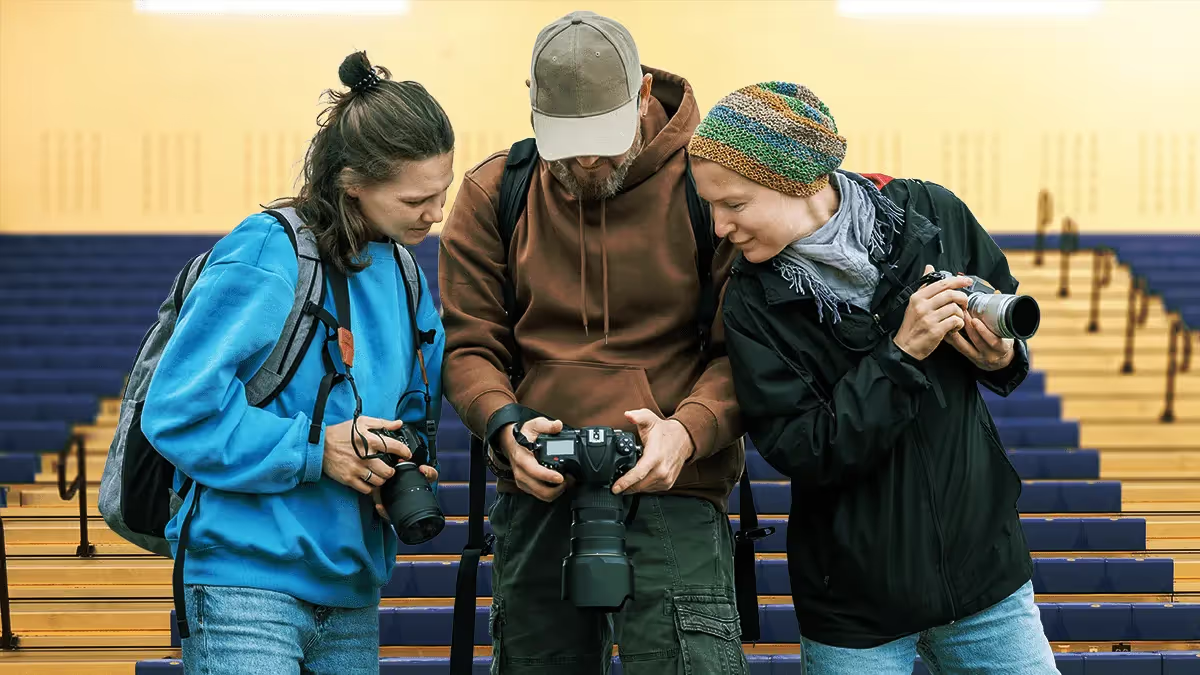
By improving the composition and lighting of your photos, you’ll be able to use any device with confidence. While drool-worthy mirrorless cameras are all the rage and DSLRs “look the part,” cellphones, tablets, and point-and-shoots can also produce great photos. The key is your perspective and awareness of the action.
Composition basics
Composition creates compelling photos. When composing a shot, think about elements like background, framing, balance, leading lines, depth of field, and viewpoint. Even at sporting events or the school musical—when you’re limited on where you can stand—take some time to go through this list in your head to intentionally get the strongest photos.
In the digital age (did you read that in my grandma voice?), just clicking away and hoping for a usable image can be a waste of time. Being intentional for five to ten moments will help you anticipate action and yield more authentic images.
Background
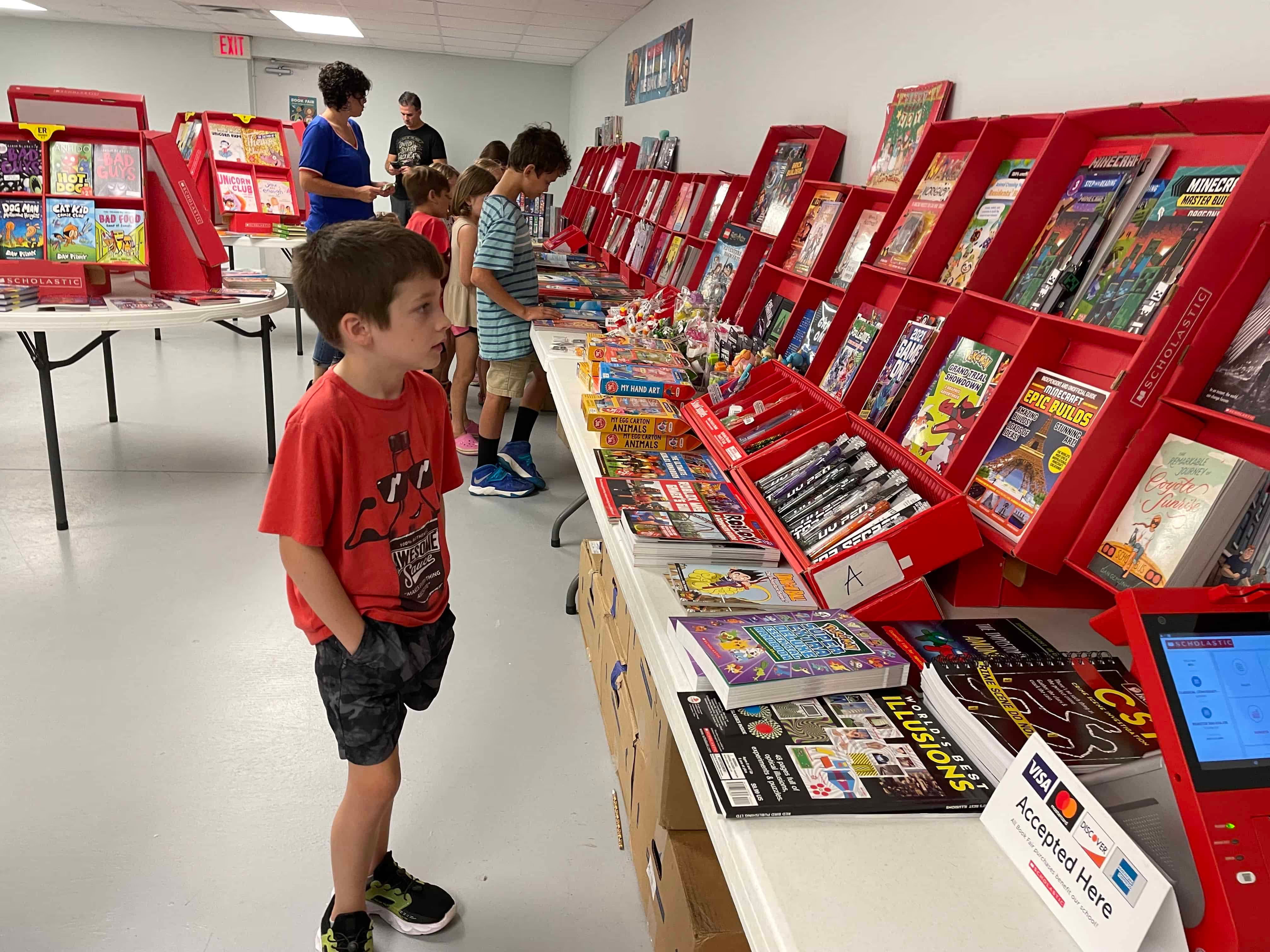
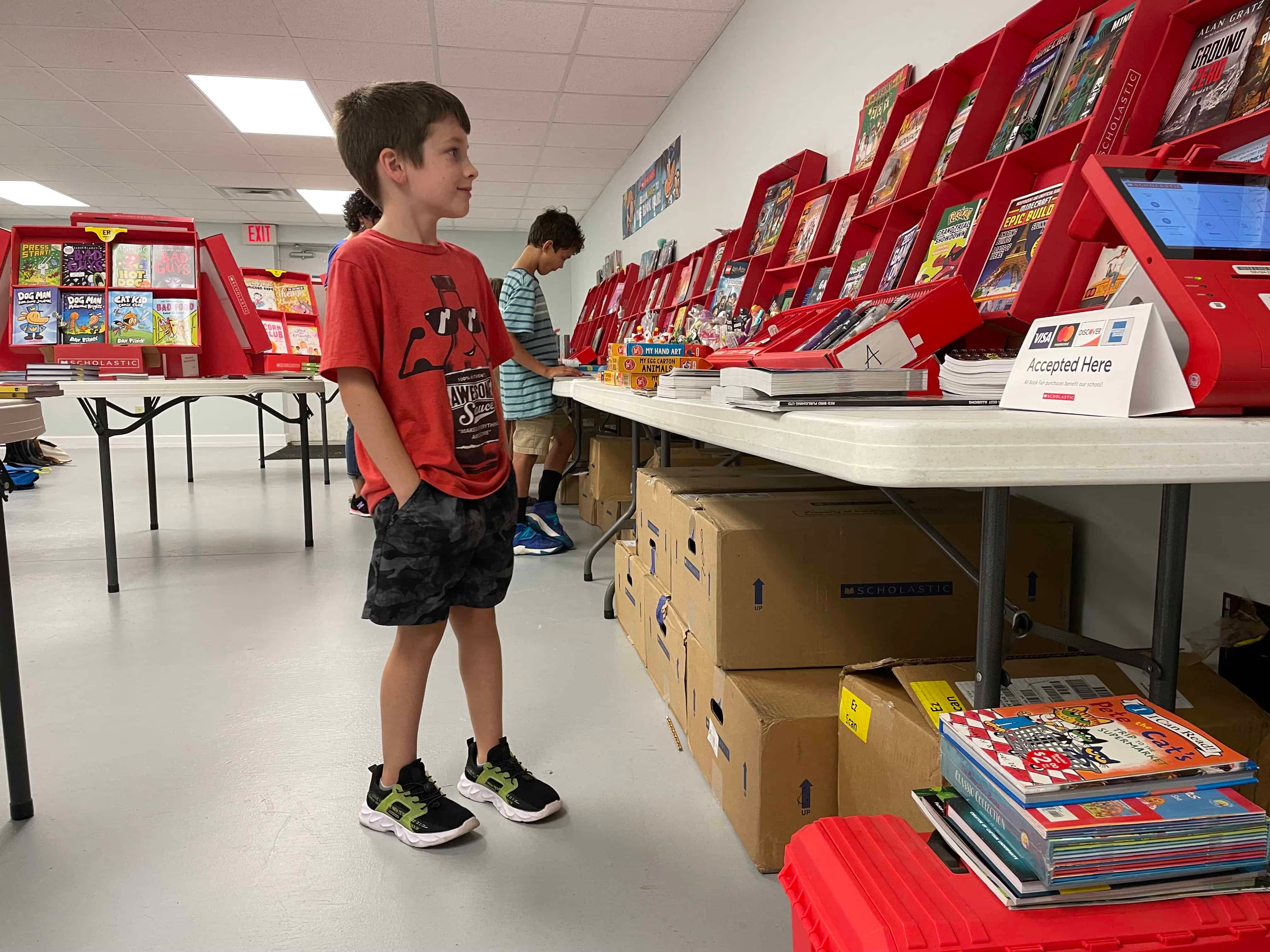
If it’s not drawing the eye to your subject, you might want to get rid of it. Take time to assess what is behind your subject:
- If possible, remove distractions like garbage cans, signs, or other people
- At sporting events, stand on the opponent’s side so you get your fans’ reactions
- Position a photographer backstage or in the sound booth to capture behind-the-scenes action
Simple camera fixes such as adjusting the aperture (see “Depth of Field” below) or environmental ones (see “Leading Lines”) can help improve your photos’ backgrounds.
Framing
Your photos should focus on key interactions. For example, a tight frame on a student meeting their teacher on the first day of school captures a meaningful moment.
Alternatively, a wider frame might show the atmosphere of an event. Consider how close you want to be and what details you want in the shot.
If the event and space allow, move around to add diversity to how you frame your subjects. My yearbook adviser used to say, “Zoom with your feet.” It’s the second-best piece of photo advice I’ve received. (Lighting takes first billing for those of you playing along at home.)

Balance
While symmetry works well in group shots, you might also want asymmetry to draw the eye to a specific part of the frame. Think about how elements are weighted in the frame to achieve the mood you want.
In the example above, the laptop is what holds us captive.

Leading lines
Use natural lines—like desks, edges of buildings, or stripes on the school bus—to draw the viewer’s eye towards the subject.
Depth of field
This can be easily achieved with portrait settings on phones and cameras. Blurring the background adds drama and focuses attention on the subject. Whether you’re using a DSLR or a smartphone, depth of field, or aperture, can elevate your images.
Viewpoint
Experiment with angles. Try taking shots from above, below, or behind to add variety and interest. Different perspectives help tell the story more creatively and capture aspects that a straight-on shot might miss.
Lighting essentials
To say lighting is crucial is an understatement. In photography, too much or too little light can impact the photo’s quality. Be aware of your main light source. If you’re at an event, take a moment to assess from where the best light is coming.
Tips for indoor photography
Windows can be problematic if they are behind your subject. Unless you are aiming for a silhouette, keep them to your side.
If the lighting isn’t ideal, adjust. Sometimes, just asking students to move to a better-lit area can make a big difference. They’re usually happy to accommodate. For example, if you are photographing a dance, set up an area to take group photos with good lighting.
Using flash can also help in tricky lighting. For instance, in a situation with backlighting (like a window behind your subject), a fill flash will illuminate the subject and balance the exposure. In low-light conditions, adjusting your camera’s ISO or shutter speed with the help of a tripod can also help capture the shot without losing detail.
Outdoor photography considerations
Outside, natural sunlight is ideal, and just like inside, positioning is important. Move so the sun is off to the side or behind your subject to reduce harsh shadows and prevent squinting. Most professional photographers avoid outdoor photoshoots when the sun is overhead for this reason. (Basically, when the fun run is happening.)
We recommend using a tripod and angling yourself so the sun is at your subject’s side.
Remember that a good photographer’s eye matters more than fancy equipment. Whether using a DSLR or a smartphone, focus on framing, lighting, and timing to compose meaningful moments.
This blog is adapted from Sandra Violette’s Photography session from TRL 24 POV: I’m on the Yearbook Team. Violette, a professional photographer and PTO mom, serves on the Onboarding and Engagement Team at Treering Yearbooks.

Yearbook myths
School-friendly is the descriptor that popped up in an email about yearbook companies. It made me snort. As great as my relationship with my sorority sister-turned-yearbook rep was, I no longer could reconcile the bottom line on the invoice, demands from school administration, and equity concerns for students. While it was time for a change, options seemed limited. Aren't all yearbook publishers the same? That myth and others nearly kept me (and many other advisers) from making a beneficial shift in the name of students. Let's go through the top six yearbook myths together and learn the truth.
Myth 1: customer service is a thing of the past
Treering re-wrote the traditional approach to yearbook contracts and customer service to meet the changing needs of parents and educators by leveraging the technology they already use in the classroom and workplace. Editors receive real-time help without having to leave school or pre-scheduling an appointment. Instead of having one person on which to depend, there is a team of experts to assist with account management, design, and ongoing training.
Beyond the live agents and customer success managers—most of whom are current or former yearbook advisers—Treering users take advantage of:
These tools improve knowledge sharing and provide their staff and students with more opportunities for development and growth.
Myth 2: I’m not in the yearbook
We all know students don’t purchase the yearbook because they are unsure if they will be in it, so we provide coverage tips to help you and your staff gather stories in fresh ways. Also, students who transfer schools mid-year can still be a part of it because yearbook editors can also add students to the portrait section at any time.

In addition, advisers can give students ownership of their memories: every Treering yearbook includes two free pages on which they can drop their vacation, extra-curricular, and milestone photos. (Even better? It’s less than a buck to add two more.)
Myth 3: you can’t include spring sports and events in the yearbook
Editors love being able to set their own deadlines and extend them if they need more time. That December 17 book order deadline is no more. With a guaranteed three-week turnaround, you have beyond February to complete your yearbook, ensuring time to capture lacrosse season, Read Across America Week, and other spring events.
Ship to home for fall delivery
Yearbook Hero Beth Stacy’s school traditionally does a fall delivery. Instead of strategizing distribution over her summer break, she uses Treering's ship-to-home feature so graduates, international students, and military families all receive their yearbooks.
Myth 4: yearbooks are out of date
In a digital world, it’s nice to have something tangible. Yearbook coordinator Erin McDonald prompts, “Are you going to hand your kid the Cloud when they graduate?”
Yearbooks are a testament to the events, people, and culture of a particular moment in time. They provide a historical account of what was happening in a school, community, or organization and allow us to relive the essence of our past. Because they serve as a showcase for individuals to display their talents and bask in their successes, yearbooks also offer an opportunity to celebrate the achievements and accomplishments of students, staff, and campus organizations
They show how each member contributes to the story of the whole.
Also, from a pedagogical perspective, yearbooks offer a canvas for students, staff, and volunteers to express their creativity through writing, photography, and design.
Myth 5: numbers are firm in fall
It’s freeing to say, “Yes, you can still order a yearbook.”
Tweet
Treering advisers say they never have to say no to a student: if someone misses the school’s deadline, they may order a book to be shipped to home. Your school’s storefront is always open.
Myth 6: I always have too many leftovers
Conversely, say goodbye to overruns and hustling boxes of old yearbooks at alumni events. Frankly, schools are financially punished for these and they are a waste of resources and space. Moving forward, every year is a sell-out year because your yearbook shipment only includes what was pre-sold. You can breathe deeply, knowing the pressure to make a sales quota is eliminated. The savings are passed on to families.
The misconceptions about yearbook publishing end here.

Yearbook design tips: the golden ratio
In Dan Brown’s popular book, The Da Vinci Code, Harvard Professor Robert Langdon sets out to solve secret codes and messages related to the golden ratio. While the book is a work of fiction, there is science to the importance of the golden ratio in design.
Rumor is the Egyptians used it to build the Pyramids, Leonardo Da Vinci himself was a scholar of its applications, and modern day financial markets create models around it. Designs built around the golden ratio are said to be the most pleasing to the eyes.
So, what exactly is the golden ratio, and how does it apply to yearbook design? Without completely getting bogged down in complicated math, think of it as a rectangle with length (side B) roughly one and a half (1.618) times the width (side A).
In an interview in Science Daily, Duke University professor, Adrian Bejan, explains why the golden ratio is so pervasive in art and design:
When you look at what so many people have been drawing and building, you see these proportions everywhere. It is well known that the eyes take in information more efficiently when they scan side-to-side, as opposed to up and down.
Bejan goes on to explain that animals have evolved their vision to scan for danger from side-to-side, or along a horizontal plane. Predators and danger typically come from behind or the sides and almost never from above or below.
As animals developed organs for vision, they minimized the danger from ahead and the sides.
If you’re interested in reading more about Bejan’s connections between nature and the golden ratio, he has a fascinating blog.
There is a lot of debate surrounding the exact science behind why we gravitate towards design that follows the golden ratio, but what is known, is that we do love it. And what’s most important to us is creating more pleasing design, right? Let’s talk about a few yearbook design tips incorporating the golden ratio.
Creating a rectangle
Let’s start with the easiest application: Building a rectangle. Choose the length of the rectangle’s short side. For this example, we’ll use 600 pixels. Now multiply 600 pixels by 1.618 to get a rectangle of 600 by 971 pixels. This rectangle follows the dimensions of the golden ratio.
Creating golden text ratios
You’ll want your headlines to be in proportion to your body copy. In order to follow the golden ratio, simply multiple 1.618 by your body text size. For example, if your text is size 10, your headline will be 10 times 1.618, or size 16.
Fibonacci sequences
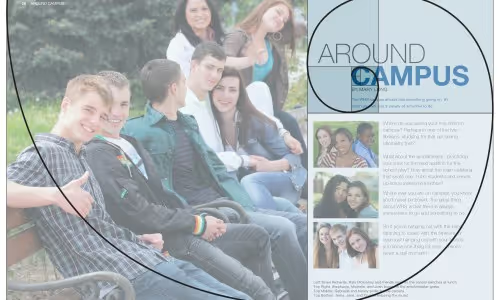
The simplest tool to creating design linked to the golden ration, is to use Fibonacci sequencing. Fibonacci sequences begin with 0 and 1. Add the previous two numbers together to get the next number in the sequence. 0,1,1,2,3,5,8,13,21…and so on. The image below is a good example of a creating Fibonacci sequence for page layout.

See how the page spread below, using Fibonacci sequencing, could create a very pleasing layout for your yearbook?

Yearbook in 60 days - part 2: get the word out
This blog is part two of a four-part series on creating a yearbook in 60 days. Each part contains two weeks' worth of tasks and inspiration, and this time, it’s all about promoting and designing the yearbook.
There are links to articles, videos, and additional blogs throughout. Treering editors, you'll need to log in to your dedicated help center to view some.

Yearbook (yes, it is a verb) along with us on Facebook, Instagram, and TikTok.
1. Share the good news
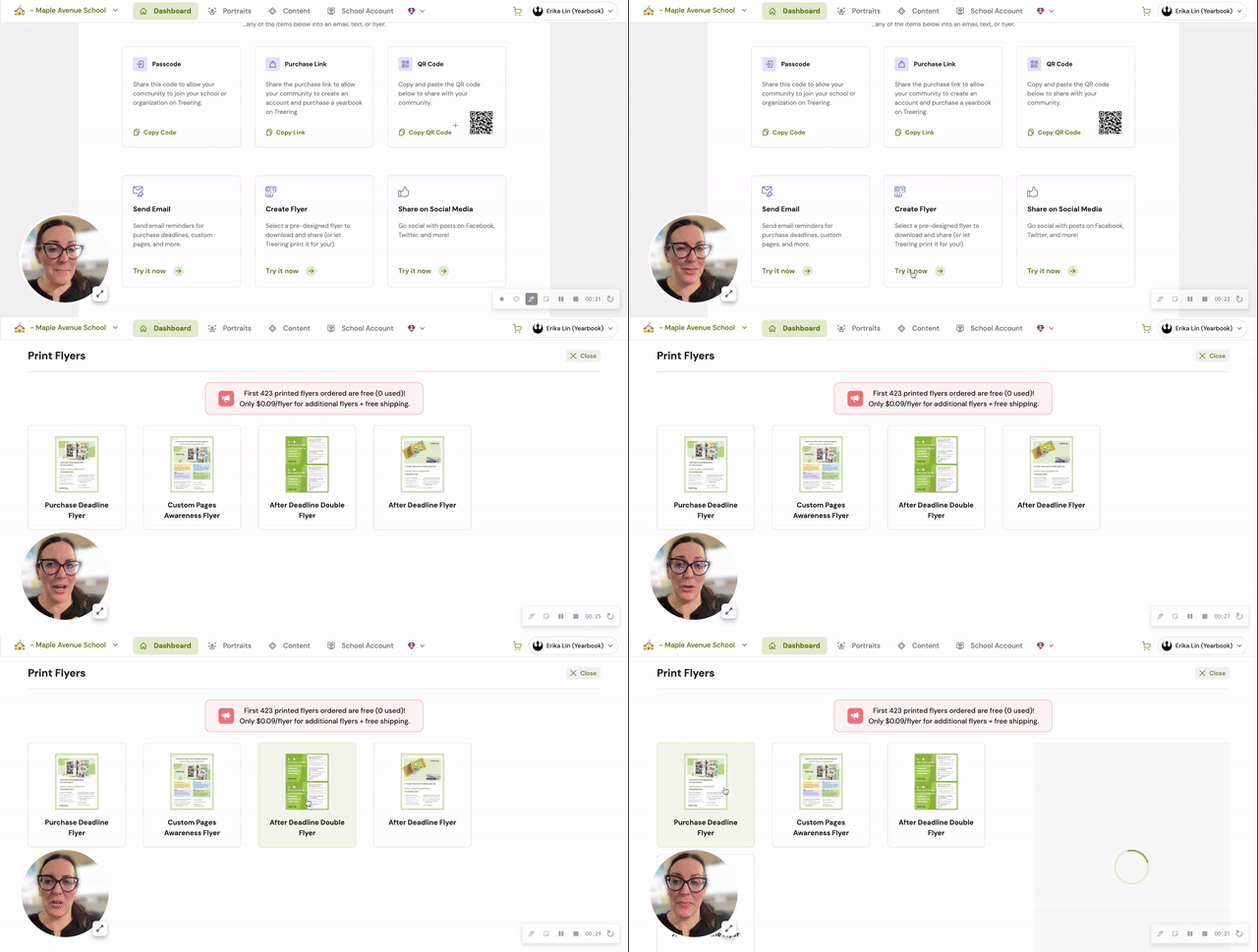
You’re building a yearbook, which is a mic-drop task in itself. People need to know how awesome (you are) the yearbook will be. Treering created flyers, QR codes, and personalized links for you to quickly share.
Yearbook marketing 101
“Buy your yearbook” is not your only message.
Yes, you are selling the yearbook. You are also rallying stakeholders (administrators, teachers, plus students and their families) to support the yearbook project by purchasing, sharing photos, donating books, and joining the yearbook staff next year. So, go get them!
Identify the best to reach each stakeholder where they live. In other words, go to them. Utilize all the communication channels available to you and evaluate which ones work best for each group.
Possible channels include:
- Staff newsletters
- Morning announcements
- All-call services
- Parent organization website
- In-school bulletin boards
- All-school events
- School meetings
- School sports games
- School arts events
- Social media
Yearbook marketing resources
2. Autoflow portraits
Ready to level up your yearbook achievement? Portraits comprise 40-60% of a yearbook. Between the choice of a Heritage Cover and building portrait pages, you’ll be halfway finished. Take a minute to let that soak in.
If a professional photographer took your school photos, chances are you have a PSPA (Professional School Photographers' Association) file. This is industry standard. With it, you'll be able to go to the portrait tab and follow the prompts. (If you don’t have a PSPA file, you can still use autoflow. See the resource section below for instructions.)
Portrait resources
3. Fill your photo folders
Remember when we set up the photo folders, and some were green? That means only the editorial team (you!) can see them and their contents. The yellow public folders are marked public, and your school community can share photos by
Treering’s privacy measures prevent just anyone from uploading to your shared folders. Only your invited school community members with activated yearbook accounts can see and share.
Parents and editors can add photos from their computer or mobile device as well as third-party connections to your personal Facebook, Instagram, Dropbox, Google Photos, and Google Drive.
5 Ideas to source yearbook photos
If you build it, will they come?
- Send each teacher a link to their class folder; ask them to share it with their room parents
- Share event-specific (hello, last Friday’s zoo trip) asks via social media
- Show coaches and club leaders how to add photos via their phones
- Connect with event organizers so they know you have dedicated space and you need pics
- Comment, “Will you share this for the yearbook [email/link]?” on Facebook photos you want to include
Crowdsourcing resources
- Article: Email Photos Directly Into A Photo Folder
- Article: Sharing Photo Folders with the School Community
4. Build your spreads (First semester events)
As your photos fill your folders, drag them onto your spreads. There are two ways to quickly complete pages using Treering’s built-in tools: auto page layout and templates.
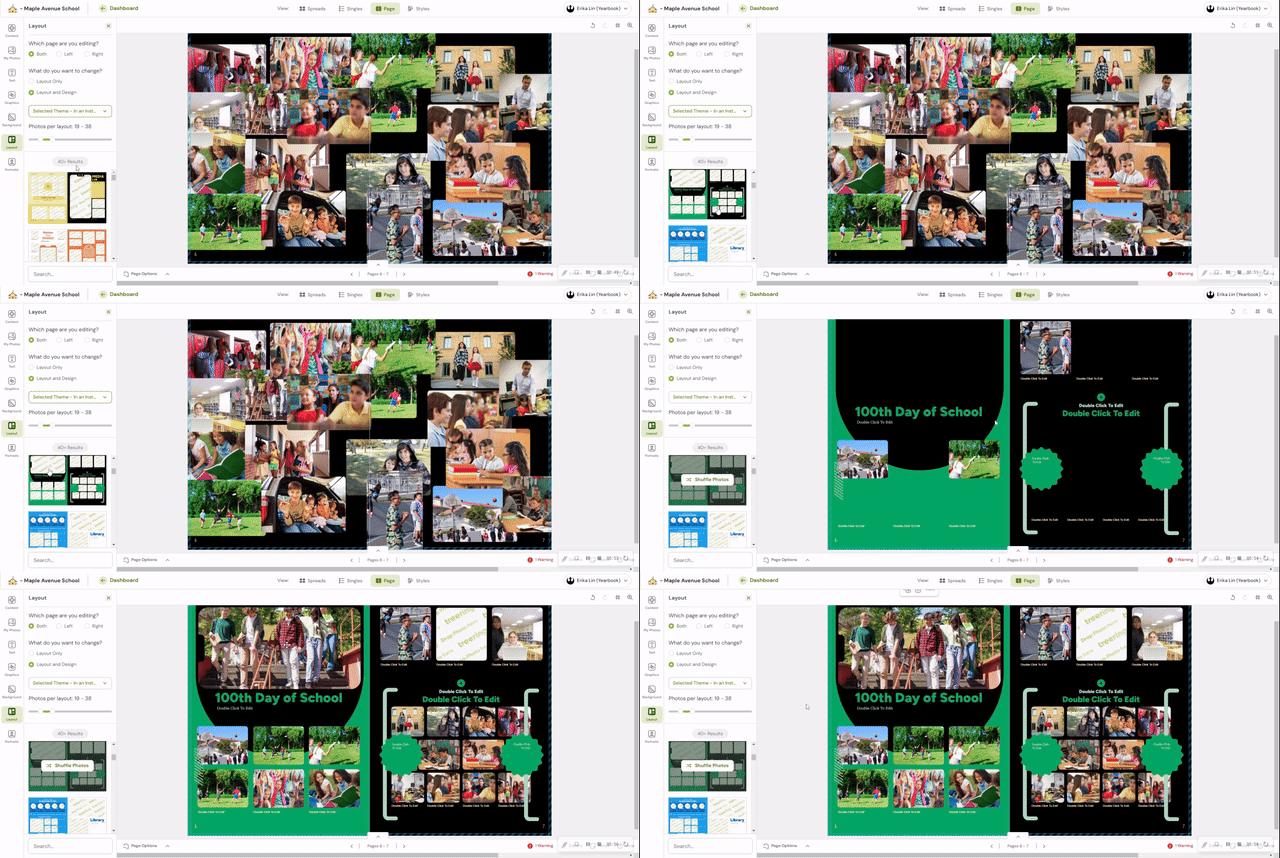
Everything is fully editable, so if you need to add or remove a photo, text box, or piece of theme art, permit yourself to do it!
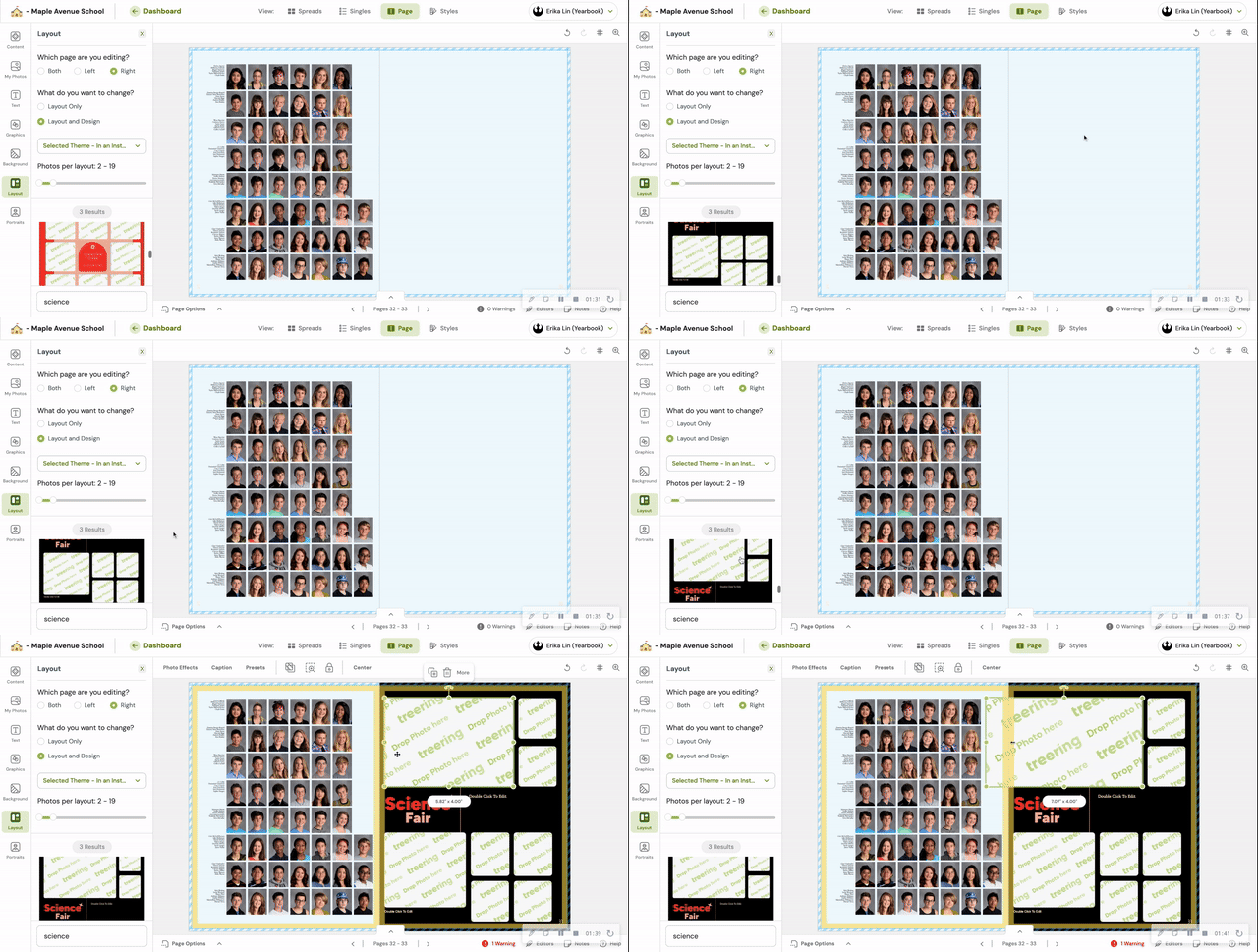
Yearbook design resources
- Article: Changing the Background on a Page (remember to login to view)
- Article: Page Editing Options - Graphics
- Article: Page Editing Options - Layout and Design
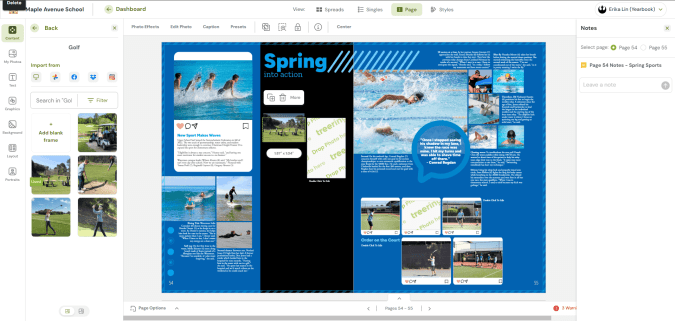
Feeling adventurous?
Create your own layouts using Treering’s drag-and-drop design tools.
Intermediate and advanced design resources
- Examples: Winners of the 2024 Design Contest
- Blog: What is Modular Yearbook Design?
- Article: Setting Default Text Styles
- Article: Setting Default Photo Styles
- Article: Alignment Tool - Customizable Guideline Grid
- Templates: InDesign
Halfway through building a yearbook in 60 days, you should split tasks between gathering photos and adding them to the book. The cover is finished. Portraits are flowed. First semester events are filling in. Congrats!

Why are yearbooks so expensive?
Yearbooks can be a costly investment for schools. Some publishers typically require schools to commit to a specific number of yearbooks at the start of the year, even before they’re sold to parents. If the school cannot sell all the books, it is left with the financial responsibility for the unsold copies.
Not Treering.

Yearbook creators, like John Vogel from Whitesville Elementary School in KY, turned their yearbook bill into a yearbook check when they switched to Treering.
Treering prints what you need using print-on-demand technology, and we make it personal. When yearbook creators enable custom pages, each family has the option to personalize two pages that only print in their yearbook, making every book unique. (More on us later.)
Yearbook pricing explained
Yearbooks are historical. Since Yale published the first one, improvements such as automated presses, desktop publishing software, and digital cameras have made mass-producing yearbooks and collaborating on design easier. Unfortunately, not all of these have translated into the bottom line.
Traditional yearbooks are expensive because the majority of yearbook charges happen in these five main areas:
1. Printing and Production Costs: Usually rolled into the base price, these are the plant charges for producing your core book, including paper, cover stock, and color vs. black-and-white pages.
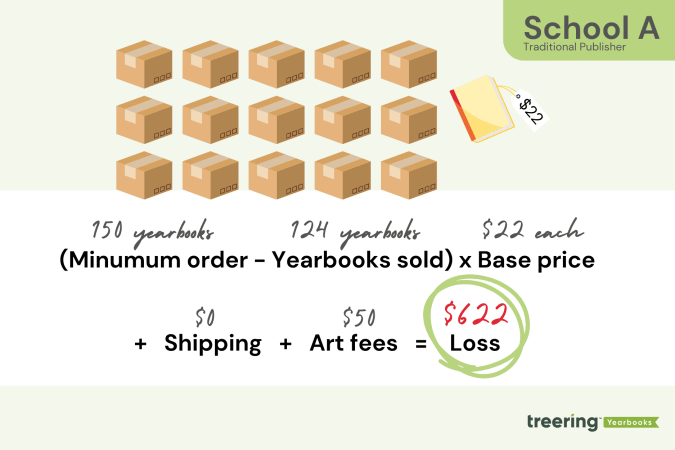
2. Design and Publishing Software: Big-name design software charges per user, even when integrated into the yearbook publisher’s design application. Publishers sometimes add on charges for professional design support; this is most common when schools want a custom cover.
3. Shipping and Distribution: Since yearbooks are heavy, the cost of delivering large boxes to the school adds up. Some schools must also factor in storage costs or extra distribution efforts, especially if books arrive after the school year ends.

4. Spring Supplements or Inserts: With deadlines as early as February, many schools create and print supplements for spring sports, graduation, or prom. These stick-in pages result in additional printing and shipping costs.
5. Fees: Financial penalties such as art set-up fees, minimums, late fees, proofs, marketing materials, cloud storage, and training and support can add up. Sometimes, advisers don’t see them until the final invoice.
https://blog.treering.com/can-our-school-afford-a-yearbook-program/
No cost yearbooks?
We’re going to toot our own horn for a sec: Treering operates at no cost to schools, with no minimum orders, commitments, or leftover books to manage. Using digital printing, our platform streamlines production, allows for a three-week turnaround, and even accommodates after-deadline orders.
There are no late fees, and you control your deadline.
This flexible approach eliminates inventory management, avoids extra costs, and makes yearbooks more affordable—especially for smaller schools.
Additionally, your per-book price is our only price. It covers everything you may be used to paying for separately, like printing, bulk shipping, e-commerce, marketing, support, custom covers, software, and top quality. It’s based on the number of pages in your yearbook and the cover finish.
Remember School A and School B from above? Here's what happened when they switched to Treerin
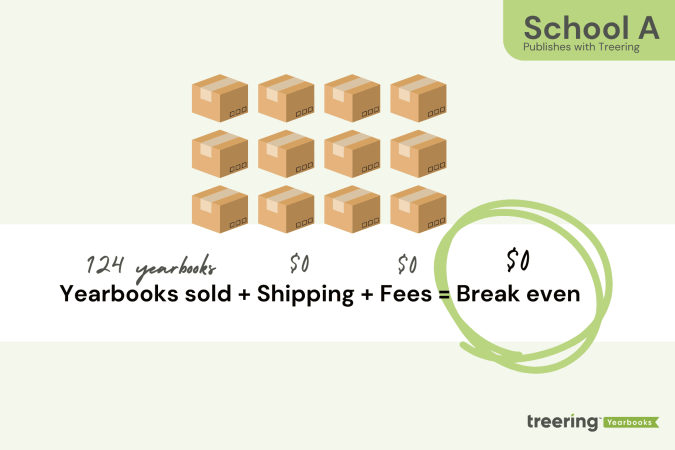
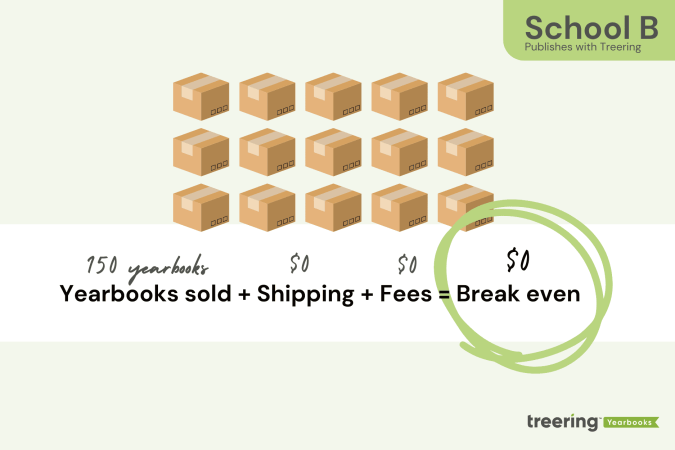
When we entered the yearbook space in 2009 touting a print-on-demand, no-contract yearbook solution, schools were wary of this too-good-to-be-true proposition. To learn how other schools gained control over their yearbook finances by partnering with Treering Yearbooks, check out these additional yearbook creator case studies:

Before teaching yearbook writing, read these 7 stories
One of the best ways to get better at writing is to read great writing. Similarly, the only way to teach students how to create exceptional yearbook copy is to absorb and share as much great writing as you possibly can. Here’s why: Good writing serves as a model of excellence for flourishing writers. It has the ability to teach and inspire at the same time. (Talk about powerful stuff.) Encouraging your staff to spend time reading—and imitating—good writing can drastically improve the quality of the yearbook copy they produce for your book. If your goal is to include yearbook stories that capture the minds and hearts of your community even more than the photographs do, reading and discussing great nonfiction is key. Ideally, you’ll be doing that before, during, and after a yearbook writing assignment, but we get that there are other parts of the book to cover, as well.
In any event, we figured we’d give your reading list a jump start by pulling together seven pieces of truly exceptional nonfiction. It’s probably worth noting that none of these pieces appeared in a yearbook. And there’s a reason for that. From saving a local library that has served a downtrodden community’s lone bright spot, to exploring the philosophical underpinnings of cooking live lobsters, these pieces offer young writers a guide to finding their voice and inspiration to chase a great story. They also happen to give you some great teaching material. Besides, we’ll pretty much guarantee you’ll walk away from each piece with beautiful prose flitting about your head, and tears (of joy, laughter or sadness) in your eyes.
7 stories to help teach better yearbook writing
1. “The North West London Blues,” by Zadie Smith
You need to read this because…
Zadie Smith is an excellent writer and one of the most influential writers in Britain (which is pretty much the same as saying she’s one of the most influential writers in the world, because, come on, we all know how much the Brits love to write). “The North West London Blues” is a piece in defense of the Willisden Green Library, a place she frequented as a child and that clearly functioned as a cornerstone of the community. Set to close and make way for commercial endeavours, the story is built around a community’s peaceful protest of the library’s closing.
Smith talks through her own experience with and passion for the library, generally speaking, as a necessary component of any community, and does so with beautiful prose. Her sprawling narrative introduction gives way to highly descriptive writing that weaves personal experience with an argumentative streak yielding a piece of writing your staff will love. Stylistically, Smith deploys parentheticals throughout the piece in an interesting way, using them to insert long swaths of supporting information, as if the speaker grabbed a snippet from a pertinent Wikipedia page.
Share this story with students who might enjoy weaving elements of personal narrative and rich description in a piece shedding light on a serious economic or social problem impacting the school community.
A Brief Snippet of What Makes this Story Great:
“Well-run libraries are filled with people because what a good library offers cannot be easily found elsewhere: an indoor public space in which you do not have to buy anything in order to stay.”
Read “The North West London Blues” here
2. “Taylor Swift Runs the World,” by Chuck Klosterman
You need to read this because…
Since the likelihood of your yearbook including a profile of some sort is rather high, knowing what a great one looks like is imperative. A profile shouldn’t be an all-out fluff piece, an unabashed celebration of an individual. But writing something that allows readers to get a glimpse of the subject without deifying them can be quite difficult. It requires tact, a strong voice, and the ability to sift through facts and quotes, determining what matters most before spinning it into a cohesive story.
“Taylor Swift Runs the World” is an exceptional example of a profile piece. Klosterman’s patented style (gratuitous hair metal references and self deprecation) makes for a great read, and the stark contrast it creates when compared to the version of Swift depicted creates great tension throughout the piece. Chuck Klosterman is a criminally underrated national treasure. The guy’s hilarious, impossibly smart, and writes with a truly unique voice.
A Brief Snippet of What Makes this Story Great:
“There’s simply no antecedent for this kind of career: a cross-genre, youth-oriented, critically acclaimed colossus based entirely on the intuitive songwriting merits of a single female artist. It’s as if mid-period Garth Brooks was also early Liz Phair, minus the hat and the swearing. As a phenomenon, it’s absolutely new.”
Read “Taylor Swift Runs the World” here
3. “Consider the Lobster,” by David Foster Wallace
You need to read this because…
“Consider the Lobster” is probably more of an assignment for an AP English class, where you’d discuss the underlying philosophical argument, and take turns wrestling with the obscure language and the paragraph-length tangential deep dives. You can read the essay’s eight pages over and over and come away with your mind blown every time.
David Foster Wallace is (in)arguably the most prolific essayist of the 90’s/aughts. His footnotes are often more illuminating (and more wonderfully written) than entire volumes produced by his peers. This essay is an interesting, off-kilter entrypoint into existential philosophy and the opulent-ish world of gourmandizing. Share this with your staff as encouragement to find their voice (no matter how “out there” it might be). Just be sure your staff doesn’t try too hard to emulate DFW: it’s impossible!
A Brief Snippet of What Makes this Story Great:
“Is it all right to boil a sentient creature alive just for our gustatory pleasure? A related set of concerns: Is the previous question irksomely PC or sentimental? What does “all right” even mean in this context? Is it all just a matter of individual choice?”
Read “Consider the Lobster” here
4. “The life and times of Strider Wolf,” by Sarah Schweitzer
You need to read this because…
If this one doesn’t make you cry, you’re wrong. Written over the span of months, Boston Globe reporter Sarah Schweitzer’s soul-wrenching story runs the gamut, detailing the life and circumstances of a young boy from rural Maine named Strider Wolf. A victim of horrific abuse, abandoned by his parents, and raised by his grandparents, Strider somehow manages to emit glimpses of optimism and happiness on a daily basis.
This is a phenomenal example of telling an utterly tragic story with tact and beautiful prose, and the perfect way to introduce your staff to emotionally impactful writing that isn’t overdone. An added bonus: the accompanying photography won a Pulitzer, so be sure to share this one with your whole staff.
A Brief Snippet of What Makes this Story Great:
“A few weeks later, shortly before the end of school, Strider sat alone, under a DARE sign, curled into a wall alcove. The lunch ladies in blue smocks had piled his tray with potatoes and carrots and chocolate milk, but he picked only at a package of Pillsbury mini-bagels. It was grab bag day. A dollar bought a brown paper bag of goodies, like pencils and erasers. Two mothers from the PTO were stuffing bags at the table over from him. Lanette had told him that morning she didn’t have a dollar.”
Read “The life and times of Strider Wolf” here
5. “Friday Night Lights,” by Buzz Bissinger
You need to read this because…
It revolutionized the way people write about sports. It’s a sociological study of small-town Texas in the late eighties. You loved the TV show. Football season is over. Need I go on? Bissinger’s essay (and book, if you haven’t read it) chronicle a Texas high school football team and the surrounding community in the late 1980’s. An outsider (from Philadelphia), Bissinger became a part of Odessa, learning the town's racial, social, and economic machinations, and penned his book in a way that tackles (had to) these themes very much head on.
While it’s unlikely your yearbook will feature pieces riddled with racial undertones, Bissinger’s ability to write about stories that didn’t take place on the field—as well as the actual accounts of football being played—in “Friday Night Lights” are excellent examples for your staff to check out.
A Brief Snippet of What Makes this Story Great:
“Crousen was saddened and dismayed. He couldn't help but wonder if Boobie, because of his natural athletic ability, had gotten too used to having everything handed to him.This August, while other college players prepared for the beginning of football practice, Boobie stood in front of his home in the Southside, chatting quietly with members of his family. It was then that his cousin Jodie found out that Boobie wasn't going back to Ranger and would sit out a year. She was shocked and worried."You're just going to rust up, "she said."It ain't gonna happen," replied Boobie, for he knew better. "It's a God-given talent."
Read “Friday Night Lights” here
6. “The Last American Man” by Elizabeth Gilbert
You need to read this because…
Don’t be shocked if you read this piece by Eat, Pray, Love author Elizabeth Gilbert and decide to move to the heart of Appalachia to build yourself a yurt and start clearing trees for fields. “The Last American Man” is another profile, though on the opposite end of the spectrum; instead of the subject being someone of unimaginable fame, Gilbert details the life and philosophy of a man who has chosen to eschew mainstream society, instead preferring the simplicity and joy of self-sufficiency (think Chris McCandless with more know-how and much better luck).
If you have a staff that swears its high school is so boring they’ll never be able to find a unique story inside its four walls, show them this. Gilbert proves that anyone, anywhere can be fascinating. Warning: There are a handful of F-bombs in the introductory paragraphs.
A Brief Snippet of What Makes this Story Great:
“Eustace hated to blow its beautiful head off, so he took his knife from his belt and stabbed into the jugular vein. Up came the buck, very much alive, whipping its rack of antlers. Eustace clung to the antlers, still holding his knife, and the two began a wrestling match, thrashing through the brush, rolling down the hill, the buck lunging, Eustace trying to deflect its heavy antlers into trees and rocks. Finally, he let go with one hand and sliced his knife completely across the buck's neck, gashing open veins, arteries and windpipe. But the buck kept fighting, until Eustace ground its face into the dirt, kneeling on its head and suffocating the dying creature.That's what living in the woods means.”
Read “The Last American Man” here
7. “Death of an Innocent,” by Jon Krakauer
You need to read this because…
A lot of high school students read Jon Krakauer’s Into the Wild. It’s a classroom classic; why not show your staff the essay from which it spawned? “Death of an Innocent” manages to combine a series of interviews, passages from McCandless’ own journal, scientific research, and even snippets of Krakauer’s own time spent wandering after college, to create a fascinating piece. Pay particularly close attention to the way Chris McCandless is characterized. Is his rugged individualism heralded, or is he painted as a brash young man woefully under-equipped for the circumstances he sought out? Is there even a definitive answer to this question?
A Brief Snippet of What Makes this Story Great:
“His education had been paid for by a college fund established by his parents; there was some dollars 20,000 in this account at the time of his graduation, money his parents thought he intended to use for law school. Instead, he donated the entire sum to Oxfam. Then, without notifying any friends or family members, he loaded all his belongings into a decrepit yellow Datsun and headed west, without an itinerary. Chris McCandless intended to invent a new life for himself, one in which he would be free to wallow in unfiltered experience.”
Read “Death of an Innocent” here
Read them. Learn from them. Teach with them. Talk through style and technique, pointing out the rhetorical devices and artistic flourishes that your young writers might incorporate into their yearbook writing. Most importantly, though: enjoy.

How to write yearbook headlines
Not only is it a part of the dominant element of your spread’s hierarchy, but headlines also help organize the yearbook by providing a visual cue and structure for the content. An effective headline can help a reader quickly understand the content of a page and decide if they want to read more. (They should!) When writing headlines for your yearbook, follow these five guidelines.
1. Set the tone
The tone of your headlines should match the tone of the yearbook, whether it is lighthearted, serious, or something in between.
Many advisers begin the theme development process with an idiom dictionary nearby to create a lexicon for the year. By incorporating keywords and phrases from the yearbook theme into the headlines, designers create a consistent and cohesive story, which ultimately strengthens your theme.
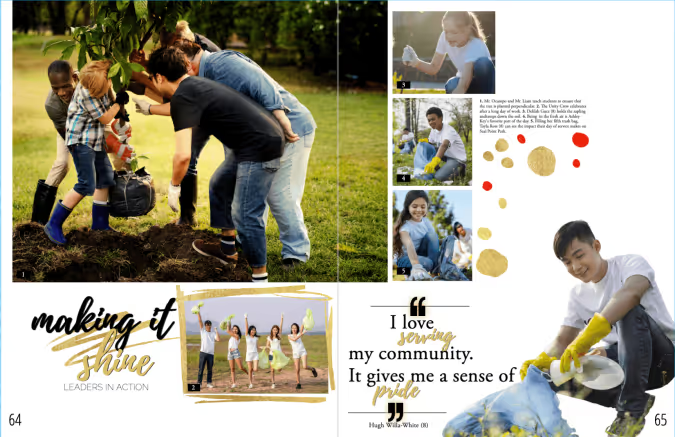
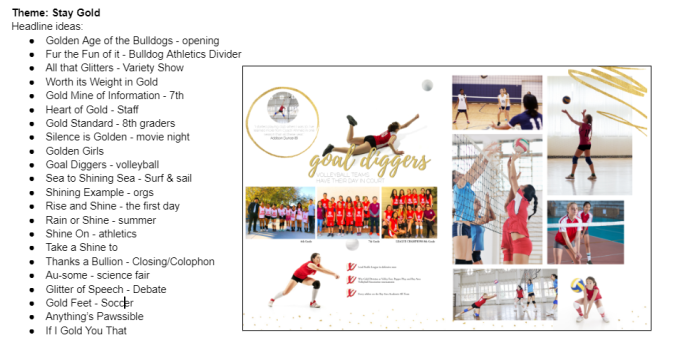
Take a look at this example: with the Treering Theme Stay Gold in mind, the editorial staff looked at all the phrases using gold and built out a list. They then assigned potentials to spreads. Notice how gold is frequently used, as are synonyms such as shine and glitter.
Considerations for theme copy in yearbook headlines
- Resist the urge to make every headline the same. In a book titled “Then & Now,” you can only have so many headlines with an ampersand. (Trust me, it was a first-year yearbook fail.)
- Use spin-offs to highlight the main concepts of the theme. Your headlines and subheadlines exist to bring the yearbook theme to life and make it an integral part of each story and spread.
2. Maximize your space
Focus your yearbook headlines and limit them to no more than a few words which accurately reflect the content of the story they introduce.
Advisers, here are some exercises that can help students produce stronger headlines:
Headline critique
Have students work in groups to critique headlines written by their peers. Collaboratively, students learn to identify strong and weak yearbook headlines and develop a critical eye for headline writing.
News scavenger hunt
Collect headlines from various sources (some ideas are below in section five) and analyze them for clarity, conciseness, and relevance to the content. This exercise can help students understand the importance of writing headlines that accurately reflect the content and grab the reader's attention.
Headline revision
To help students learn to refine their headline-writing skills and make their headlines more effective, have students write several headlines for a given story or event and then revise them to make them more concise, clear, and attention-grabbing.
3. Follow AP Style guidelines:
When it comes to all things style, the Associated Press Stylebook sets the rules for copy, abbreviations, and formatting.
- Capitalization: Capitalize the first word and all subsequent important words in the headline, including prepositions and conjunctions of four letters or more.
- Active voice: Use active voice in your headlines, as it makes them more dynamic and engaging.
- Punctuation: Limit the use of punctuation in headlines, typically using only a single exclamation point or a question mark, if necessary. (Personal anecdote: My undergrad journalism professor told me I get three exclamation points in my career, and to use them wisely.)
- Conciseness: Keep headlines concise and to the point, typically no more than a few words.
- Spelling and grammar: Make sure to check the spelling and grammar of each headline to ensure that it is error-free and professional-looking.
4. Wordplay works
Make your English department swoon with literary techniques such as puns or alliteration if appropriate.
While "Football" is a straightforward and accurate way to describe the subject matter, using it as a headline for a story about the football team in a yearbook may not be the most engaging option. To make the headline stand out and capture the reader's attention, it's often better to use wordplay or a more descriptive phrase that goes beyond just the basic name of the subject.
For example, instead of simply using "Football" as the headline, you could use an alliteration that showcases your mascot such as “Lions on the Line” or "Touchdown Titans."
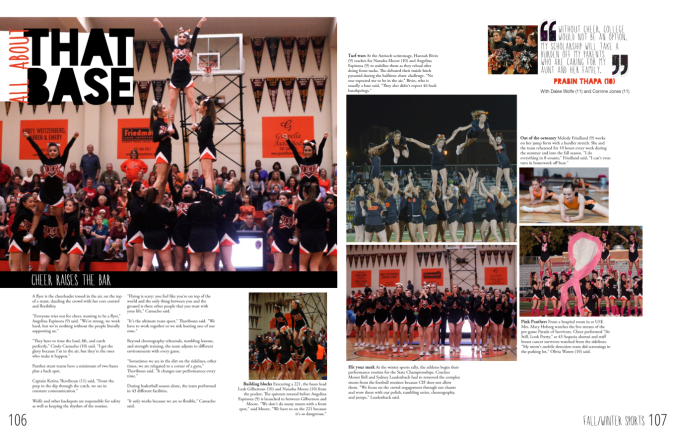
You could even use something from the story copy to tie the spread together: below this cheer spread's feature story is about the relationship between cheer flyers and bases.
5. Keep headlines timely
Consider the current events and trends that are relevant to the yearbook and include them in your headlines. From Homecoming (Game of Thrones) to personality profiles of faculty (How I Met Your Teacher), you can get creative in the Heartland (any location on campus, such as the quad, where the whole school gathers). See what we did there?
Find inspiration by looking at:
- News websites and magazines
- Social media platforms
- Advertisements
- Books and novels
- Popular songs, TV shows, and movie titles
- Quotes and (appropriate) jokes
- Previous yearbooks
Following these tips and finding your headline groove will strengthen your yearbook theme and tell the story of your year. For additional writing tips, check out these blogs: